


For organisations of any size, across any sector, seamless IT isn't a 'nice to have'; it's an essential part of efficient, secure operations and - in turn - sustainable business growth. In other words, establishing the right approach to service management is critical, so tickets are always assigned to the right resolver, and any issues can be resolved as quickly as possible. But as organisations scale up and their IT ecosystems naturally become more complex, with the requirements of multiple teams needing to be factored in, this often becomes easier said than done.
The natural solution is an IT Service Management (ITSM) platform, which intelligently automates multiple aspects of IT workflows - including incident, request, problem, and change management - and provides end users with a range of self-service options, including online portals and knowledge bases, typically based on the globally-recognised ITIL framework. However, for all the considerable advantages these platforms offer, their successful implementation frequently proves challenging for example:
- Designing a bespoke ITSM platform in-house is extremely complex and time-consuming, and so may not be practical for internal IT teams. As a result, as organisations scale up, they find themselves in an 'IT limbo', where a simple spreadsheet is no longer fit for purpose, but a full-scale ITSM deployment will not be achievable
- Most off-the-shelf ITSM platforms only offer limited scope for tooling, which can be a problem when highly specific compliance obligations must be adhered to
- If an organisation wishes to maintain its own, in-house resolvers (i.e. their internal IT team), relying on a third-party for ITSM services may prove problematic, as the provider may not wish to provide full access to their own system, as opposed to user access
Based on these challenges, it seems like what's needed is a solution to bridge the gap, allowing smaller IT operations to access the benefits of ITSM without the cost and complexity of a fully bespoke deployment. While this has been largely considered impossible for a number of years, our ongoing conversations with organisations already utilising our evolving portfolio of Managed IT solutions, we realised there had to be another way…
This was the impetus for our ITSM as-a-Service platform, which combines the industry-leading ServiceNow® platform with leading-edge domain separation technology within our own MSP environment. This makes all the benefits of robust ITIL capabilities readily accessible to IT environments of all sizes via proven, standardised approaches that take away the traditional complexity while still maintaining enough flexibility to accommodate most established workflows.
For example, if an organisation wishes to maintain its own resolvers, as in the example above, we are able to offer a fully separated instance to enable this, with tickets automatically distributed back to the designated agent.
We are able to take this further for organisations who predominantly work with third-party providers, seamlessly integrating our platform with the wider IT ecosystem without putting the integrity of critical data at risk. Tailored instances for specific tasks can also be implemented, if required.
In this way, we empower our customers to take their Managed IT ecosystems to the next level, with ITSM as-a-Service providing the tools to achieve greater control and visibility of their IT workflows, with ample room to scale and pivot as their requirements evolve.
The full range of benefits offered by this new model are already revealing themselves, with one NHS organisation's revamped service desk having achieved...
- 75% of IT tickets resolved at the first point of contact
- More than 5,000 gold ratings from end users
- An NPS raised from 57% to 90%
… but this is all part of a longer journey, where we reconsider IT's wider role across organisations, shifting perception of it from an ongoing financial burden to a powerful driver of business growth and innovation. However you wish to develop your IT workflows in response to your organisations' evolving requirements, get in touch today and take the first step towards making this a reality.
670 Hits

The public sector's relationship with technology is evolving at an unprecedented rate, as familiar legacy systems are increasingly phased out in favour of leading-edge digital infrastructure that offers levels of scalability, sustainability, and operational resilience that would previously have been dismissed as impossible.
4963 Hits

For a number of years now, the evolution of the Retail sector has typically been positioned as brick-and-mortar shops - including many longstanding fixtures of UK highstreets - fighting a losing battle against online retailers, such as the seemingly monolithic Amazon. However, the reality of the situation is not quite so clear cut…
3110 Hits

In July of 2019, Exponential-e hosted a roundtable at The Ritz London, bringing together 18 top UK architects to discuss topical issues across the sector and sharing views on the matters at hand. One of the topics raised was the newly launched Architects Declare manifesto and its 11-point plan for tackling climate change and biodiversity loss. From 16 founding signatories, word spread like wildfie and within weeks, hundreds of practices - large and small - signed up, signalling that our architects were ready commit to operating in a greener, more sustainable manner.
3848 Hits

With the flexible office model slowly but surely supplanting the traditional working environments in favour of dynamic co-working spaces for a number of years now, we have seen many organisations reconsider the way they think about commercial real estate.
3629 Hits

The Finance sector has always been one of the most dynamic, rapidly evolving industries, and this shows no signs of changing any time soon. But while shifts in the landscape may well open new opportunities, they will also come with new challenges, and it is the organisations who are ready and able to face these head-on who will continue to thrive in the years ahead.
3222 Hits

Secure Access Service Edge (SASE) is rapidly establishing itself as the solution of choice for the next generation of enterprise networks, where optimal control, visibility, and scalability are essential. In the first quarter of 2024 alone, the SASE market experienced a 23% surge, as more and more organisations began taking advantage of its capabilities.
4574 Hits

The past year has challenged the UK's education sector in ways that would previously have been inconceivable, with children learning from home the majority of the time since March.
3983 Hits

With lockdown restrictions finally easing, and the public looking forward to enjoying the different activities they have been deprived of for the past two years, it's certainly an exciting time for the UK's Hospitality & Leisure sector. But as hotels get ready to open their doors again, it is essential that hospitality professionals do not lose sight of the challenges that will be involved.
3121 Hits

With £4.2 billion set aside for the UK's healthcare sector in the 2024 Spring Budget, there are new opportunities for digital transformation initiatives to optimise operational efficiency and enhance patient care across the country, provided they are correctly acted upon.
Ultimately, the goal is to save £3.5 billion over the next five years by making things more efficient, in line with the NHS Long-term Workforce Plan. Simple, right?
Well, yes and no…
2380 Hits

In just a few short years, the way we work has changed forever, with employees at all levels now working at home, in the office, and on the move, communicating and collaborating with customers and colleagues in ways that would have previously been inconceivable. However, as we have seen in recent months, with numerous high-profile cyber-attacks on corporate infrastructure, we can never allow ourselves to become complacent when it comes to the security of critical data. In other words, while we should certainly be ready to explore new models of working, the opportunities on offer must not blind us to potential cyber risks.
Let's consider, for example, the now ubiquitous Bring Your Own Device (BYOD) model…
The BYOD model simply means employees are allowed to utilise whichever devices they like for work purposes, utilising them to connect to corporate networks in and out of the office. While this concept has existed for some years now, the COVID-19 pandemic and the resulting lockdowns saw numerous organisations rush to implement the concept at scale, ensuring their employees could transition to remote working with minimal disruption.
While this was largely successful in terms of maintaining BAU as much as possible, in the years since lockdown, many organisations have found that these hastily implemented policies have introduced a number of challenges – some obvious, some less so – for internal IT teams.
These include:
- Allowing employees the freedom to use their
preferred devices without compromising the integrity of corporate
infrastructure
- Ensuring users' personal data is not inadvertently put at risk
- Maintaining full compliance with an evolving range of data protection regulations
- Ensuring a diverse range of devices and operating systems all receive the latest security updates as soon as they become available
- Ensuring corporate security policies are consistently enforced every time employees connect to the corporate network, without this requiring an impractical level of manual effort
All IT teams will already have systems and processes in place for asset management, ensuring corporate devices are kept secure throughout their lifespans and that users are equipped with whatever they need to best fulfil their roles. However, when employees are free to connect through whatever devices they like, control and visibility become increasingly difficult to maintain.
IT Service Management (ITSM) platforms must therefore evolve, providing IT teams with the tools they need to accommodate BYOD and other new ways of working without requiring the inherent cost and complexity of building a bespoke solution in-house.
We explore these challenges in our latest report, Rethinking IT Service Management: A New Model of Seamless IT for the Modern Workforce, in which our IT experts posit a new approach that allows for a truly holistic view of all workflows while still providing employees with the flexibility to which they have become accustomed.

1243 Hits

Traditionally, different aspects of organisations' IT ecosystems have been highly siloed, with little interaction between different areas. For example, organisations' HR systems would have no reason to connect with their contact centre environments and so would be managed independently, via segregated systems and processes. However, the ways in which we communicate and collaborate have fundamentally changed in recent years. Disparate systems are now highly interconnected, with ever-growing volumes of data flowing between them on an ongoing basis.
1528 Hits

The regulatory landscape is more complex than ever, with organisations across the public and private sectors having to meet an increasingly stringent range of obligations across all aspects of their services, including their IT ecosystems. Far from a box-ticking exercise, this is an essential part of strengthening business' overall security and resilience in the face of numerous aggressive, highly sophisticated cyberattacks. Indeed, as we closed out the first half of 2025, 67% of medium businesses and 74% of large businesses had experienced a breach or cyberattack of some description[1].
The evolution of the regulatory landscape is an appropriate response to these threats, helping minimise the risk of serious breaches affecting critical services that citizens depend on. To this end, G-Cloud bids require organisations to have IT Service Management (ITSM) tooling in place, in full compliance with the ITIL standard, without which they will be unable to bid on some of the most sought-after public sector contracts.
This presents a number of singular challenges for organisations, many of whom will not have the time, resources, or internal expertise to develop a bespoke ITSM platform in-house. However, most off-the-shelf platforms lack the flexibility required to accommodate the required tooling.
As a result, too many organisations will miss out on potentially lucrative business opportunities. But rather than treat these new compliance obligations as a burden, we should look at them as an opportunity to establish a new standard for ITSM deployments, ensuring they continue to form the foundation of seamless, secure IT that supports organisations' efficiency, innovation, and ongoing growth. This means a 'best of both worlds' scenario, where the cost efficiency and streamlined deployments of off-the-shelf solutions is combined with bespoke solutions' ability to accommodate the most rigorous compliance obligations.
This will require a whole new approach to
ITSM – one which we explore in depth in our latest report, Rethinking IT Service Management: A New Model of Seamless IT for the Modern Workforce. Inside, our own IT specialists explore the emerging challenges that successful ITSM deployments present to organisations, along with all the operational and business benefits that a world-class platform can open up. If you are in any doubt about whether your ITSM platform will remain fit for purpose in the years ahead, do not make any new investment until you have considered this information. Read the report now, and do not hesitate to get in touch if you would like to explore any aspect of your unique digital journey with our experts.
Don't Let Outdated Systems Leave You Exposed — The Future of Seamless IT Support
Modern ITSM is no longer optional - it's essential. The rise of remote work, tougher regulation, and growing cyber threats has exposed the limits of traditional, reactive systems. Weak workflows, lack of integration, and compliance gaps are risks that can't be ignored.
This whitepaper sets out a new framework: AI-powered automation, integrated security, and scalable architecture built for modern demands. It explains why compliance isn't a burden but a competitive necessity - especially in the public sector - and argues that expert delivery is just as important as the right tools.
Dive in if you want to future-proof your IT, protect your data, and avoid being caught out when the next crisis hits.
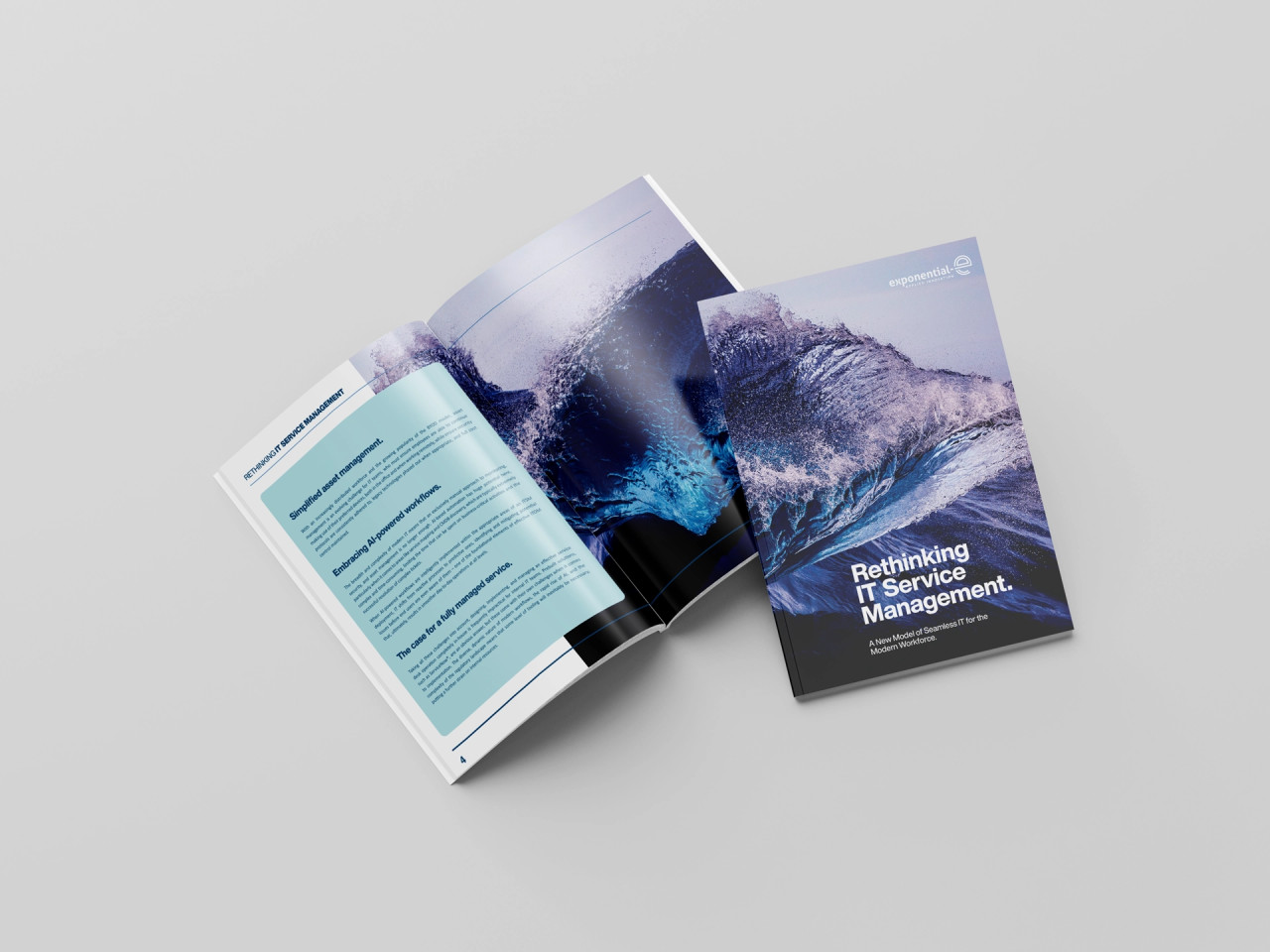
Rethinking IT Service Management
1642 Hits

On Monday 13th October, Vodafone customers experienced a blackout of internet and mobile services, with more than 130,000 reports flagged to web outage monitors. In many cases, business users reported they had been left unable to trade, or even communicate with colleagues or customers, throughout the outage, leading to a demonstrable loss of profits. This included other telecoms providers utilising Vodafone's network, who were similarly affected.
1591 Hits

"Not-for-profit organisations have provided a trusted and valued source of independent advice for people throughout England for many years. They are a vital part of our national support infrastructure and somewhere to turn to in times of crisis."
Nick Hurd, MP
4325 Hits

The healthcare sector generates higher volumes of patient data on a daily basis than ever before - all of which conceals a rich vein of opportunities to optimise efficiency and enhance patient care. The demand for more efficient diagnosis and more effective management of data has naturally led to the rise of digital pathology and - in turn - the Picture Archiving and Communication Systems (PACS) that underpin these initiatives.
4462 Hits

The past decade has been a challenging one for the Retail sector, to say the least. Much has already been written about the impact of online shopping and streaming services on the high street, and the rise of COVID-19 and recent supply chain disruptions have only compounded the challenges facing even the most established brick-and-mortar retailers.
2786 Hits

When it comes to building brand loyalty, customers increasingly expect the retailers they shop from - whether that's online, in person, or via click-and-collect - to demonstrate tangible efforts to operate in an ethical, sustainable, and environmentally friendly manner in everything they do.
2923 Hits

For many years, retailers' CCTV systems and IT infrastructure have operated in relative isolation, competing for space and resources whilst never utilising the full potential of their combined power. The good news is that next-generation IT infrastructure is increasingly bridging this gap, in order to reduce costs, simplify infrastructure, and allow retailers to access a range of actionable data streams through AI and analytics.
3882 Hits

After several years of serious global upheaval, it is clear that resilience, agility, and the ability to adapt to the unexpected are critical priorities for all organisations – regardless of size or sector. However, this accelerated pace of change has, in many cases, revealed the limitations of existing IT services. With an increasing emphasis on on-demand services and a highly fluid workforce, legacy services and their systems often struggle to support new propositions and customers' evolving needs, which will – in turn – make maintaining a competitive advantage difficult, if not near impossible.
3878 Hits

© 2026 Exponential-e Ltd. Reg. No. 04499567, Reg. Address:100 Leman Street, London E1 8EU