


The ongoing evolution of our nation's Critical National Infrastructure (CNI) requires large-scale CAPEX investment in core infrastructure, along with the introduction of digital initiatives that support the convergence of physical and digital systems, enhancing performance, efficiency, and availability.
This presents a multi-dimensional challenge for CNI organisations, who are often forced to accelerate or adapt their long-term transformation roadmaps, whether this means scaling, restructuring, preparing for an exit or investment, or a combination of all three.
In parallel, the increasing deployment of digital technology amongst Operators of Essential Services (OESs) has led to a range of new security and compliance challenges. When shareholders are made aware of these risks, they – correctly – demand reassurance that their high-value investments will be protected.
As part of the Azure Expert Managed Service Provider programme, Exponential-e will now benefit from enhanced collaboration with Microsoft, including deeper technical engagement, advanced tooling, and strategic programme alignment. This will enable accelerated innovation across Azure data and AI services, earlier access to emerging capabilities, and stronger co-investment opportunities that will directly benefit our customers.
For customers – particularly those operating in complex and highly regulated sectors, such as financial services, healthcare, professional services, and the public sector – this recognition provides assurance that their Azure environments are managed to globally recognised standards, reinforcing Exponential-e's position as a trusted partner, capable of delivering measurable business outcomes across the full Cloud lifecycle.
For this reason, technology partners supporting CNI verticals must be alert to the requirements of a diverse stakeholder community, offering informed advice throughout the investment process, providing an accurate assessment of risk and compliance challenges, and translating often conflicting priorities into deliverable actions that will drive business growth.
Let's consider how this should work in practice…
Enabling data-driven decision-making throughout mergers and acquisitions
When physical and digital assets are seamlessly and securely interconnected, operators enjoy access to rich veins of real-time data around the status of key platforms. This data can be used to accurately benchmark all security and operational risks against technical and regulatory compliance, establishing their potential impact on service availability and – in turn – the predicted ROI.
When this level of visibility has been achieved, improvements in both efficiency and profitability are unlocked, benefiting the wider stakeholder community and enabling more informed decision-making throughout every stage of mergers and acquisitions, including:
- Pre-acquisition due diligence: Identifying technical debt and flaws, establishing security and compliance risks with a concrete value for their remediation.
- Post-acquisition investment: Establishing OPEX costs needed to support effective systems and processes to ensure the continued security and compliance of critical infrastructure.
- Exit readiness: Creating a definitive, auditable log of critical assets, reflecting full regulatory compliance and the ability to meet investor scrutiny.
Specialist IT/OT advisory and support to protect investments
This role can be taken further, with technology partners serving as advisors to PE firms and mid-cap boards, providing them with the technical and operational oversight they need to protect and validate their investments. This should begin with rigorous technical (i.e. the IEC62443 standard) and regulatory (i.e. NIS-2018/CAF) assessments, conducted in line with the overall risk appetite and corporate strategy. Once these information streams have been established, they can be used to augment CIO and CISOs' capabilities, bridging the knowledge gap between enterprise IT and OT systems and optimising governance and risk management.
When it comes to making informed investments in critical infrastructure, the value of objective, strategic guidance from experienced specialists cannot be overstated. Technology partners who are able to support IT leadership in this way will evolve from pure providers to true enablers of business growth, providing tangible value to investors while optimising the performance, security, and availability of critical services.
If you require guidance around any planned or existing investments in CNI infrastructure, contact us to arrange a consultation of potential risks and a detailed assessment of how they can be mitigated, based on globally recognised standards and our deep experience across multiple CNI verticals, including Energy, Utilities, Transport, Defence, and Industry.
113 Hits

Establishing a world-class digital foundation for emergency services across the UK
About the ARP
The Ambulance Radio Programme (ARP) delivers mission-critical communication and mobilisation technologies to ensure effective communication between Ambulance Service Trusts, the NHS, and other emergency responders across the UK.
The Challenge
The successful delivery of emergency services depends on critical platforms being always on and always available, ensuring citizens in the most remote areas can always make contact and receive aid as quickly as possible. With even the smallest periods of downtime potentially costing lives, ARP demands the highest standards of performance and resilience from its underlying connectivity, with rigorous SLAs in place to ensure these targets are met.
In order to further optimise the availability of emergency services across the UK, there are currently two major programmes being implemented by ARP across the UK. The Control Room Solution (CRS), which is utilised by ambulance services across England and Scotland, ensuring critical communications between the emergency control room dispatchers and operational crews are completely seamless. The Mobile Data & Vehicle Solution (MDVS) will replace legacy communications equipment for the English and Welsh Ambulance Service Trusts.
Both programmes required a secure, resilient, and highly available IT infrastructure as the underlying foundation, for which ARP selected the Exponential-e Group - encompassing Exponential-e, Vysiion, and Xpertex - as their trusted technology partner.
The programme has lots of moving parts, and a lot of key users and stakeholders - all with unique needs and ways of working. ARP needed a team, processes, and technologies which could be used to create a common service, capable of integrating with each Ambulance Trust and user organisation.
Mathew Baker, IT Service Manager, ARP
The Solution
The Exponential-e Group has worked closely with ARP for a number of years, beginning with the CNAM project, which Vysiion successfully executed before its acquisition by the Group. Here, multiple critical platforms that were previously managed on a regional basis, with discrete infrastructure and applications run independently by each Trust across England and Wales, were fully centralised in ARP's data centres, including both CRS and MDVS. A whole new network was utilised as the foundation, connecting the centralised ARP control room applications to each regional Trust's control rooms. This highly resilient network infrastructure was designed to maintain the highest levels of uptime and availability across all regions, optimising the delivery of critical services.
ARP would later build on these early successes, engaging the wider Exponential-e Group as its requirements evolved. Exponential-e later delivered a fully centralised, UK-based service desk, available 24 / 7, and continues to work with ARP's own teams to identify new opportunities for service improvements and process optimisation.
Over the course of several years, the partnership between ARP and the Exponential-e Group has continued to evolve and is now in a strong position to take on further challenges. A particular focus is the digitisation of processes and onboarding of multiple new solutions to further optimise the availability and delivery of emergency services nationwide.
Solution benefits
- Full centralisation of multiple critical platforms, powered by a highly resilient, highly available private network, supporting consistent performance and availability of critical services across all regions.
- A 24 / 7, UK-based service desk for all IT-related questions, concerns, and incident management.
- A partnership built on trust, consultation, and service quality, driving ongoing improvements.
- Hands-on engagement and integration with other suppliers.
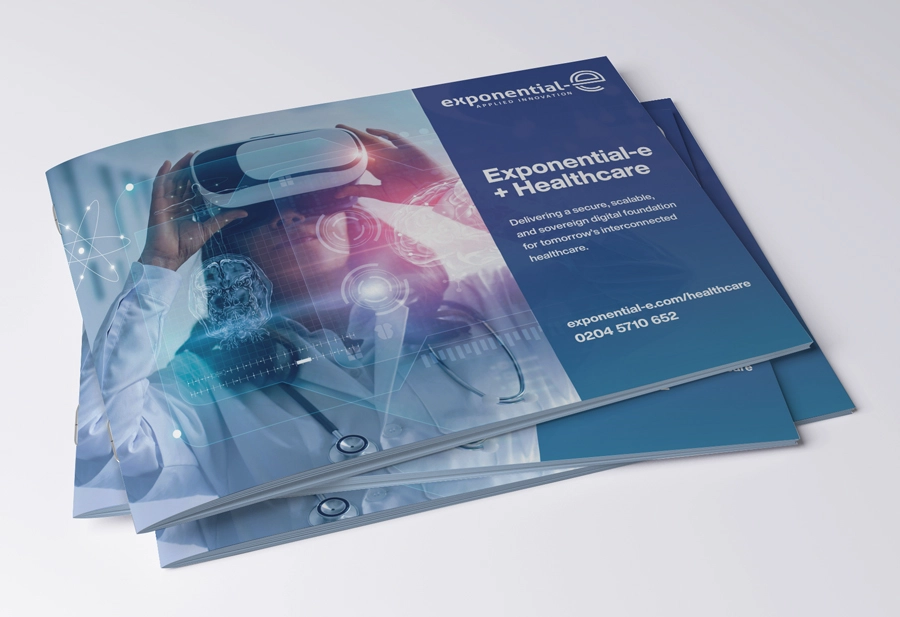
Secure, connected infrastructure enabling better patient outcomes and faster clinical innovation.
Discover how UK healthcare organisations are building resilient digital foundations to accelerate diagnosis, connect care, and support frontline teams. Through real-world NHS examples, see how the right infrastructure partner turns transformation into measurable impact.
6315 Hits

On Monday 13th October, Vodafone customers experienced a blackout of internet and mobile services, with more than 130,000 reports flagged to web outage monitors. In many cases, business users reported they had been left unable to trade, or even communicate with colleagues or customers, throughout the outage, leading to a demonstrable loss of profits. This included other telecoms providers utilising Vodafone's network, who were similarly affected.
1567 Hits

Critical infrastructure organisations are once again being warned of the threat posed by malicious cybercriminals, following a ransomware attack against a state-owned energy company in Pakistan.
4292 Hits

A 30‑year‑old man has been charged with launching a cyberattack on the German subsidiary of Russia's state-owned oil giant Rosneft. The cyberattack, which happened in March 2022 in the aftermath of Russia's invasion of Ukraine, crippled the company's operations and cost millions of euros in damages.
3375 Hits

© 2026 Exponential-e Ltd. Reg. No. 04499567, Reg. Address:100 Leman Street, London E1 8EU