


For organisations of any size, across any sector, seamless IT isn't a 'nice to have'; it's an essential part of efficient, secure operations and - in turn - sustainable business growth. In other words, establishing the right approach to service management is critical, so tickets are always assigned to the right resolver, and any issues can be resolved as quickly as possible. But as organisations scale up and their IT ecosystems naturally become more complex, with the requirements of multiple teams needing to be factored in, this often becomes easier said than done.
The natural solution is an IT Service Management (ITSM) platform, which intelligently automates multiple aspects of IT workflows - including incident, request, problem, and change management - and provides end users with a range of self-service options, including online portals and knowledge bases, typically based on the globally-recognised ITIL framework. However, for all the considerable advantages these platforms offer, their successful implementation frequently proves challenging for example:
- Designing a bespoke ITSM platform in-house is extremely complex and time-consuming, and so may not be practical for internal IT teams. As a result, as organisations scale up, they find themselves in an 'IT limbo', where a simple spreadsheet is no longer fit for purpose, but a full-scale ITSM deployment will not be achievable
- Most off-the-shelf ITSM platforms only offer limited scope for tooling, which can be a problem when highly specific compliance obligations must be adhered to
- If an organisation wishes to maintain its own, in-house resolvers (i.e. their internal IT team), relying on a third-party for ITSM services may prove problematic, as the provider may not wish to provide full access to their own system, as opposed to user access
Based on these challenges, it seems like what's needed is a solution to bridge the gap, allowing smaller IT operations to access the benefits of ITSM without the cost and complexity of a fully bespoke deployment. While this has been largely considered impossible for a number of years, our ongoing conversations with organisations already utilising our evolving portfolio of Managed IT solutions, we realised there had to be another way…
This was the impetus for our ITSM as-a-Service platform, which combines the industry-leading ServiceNow® platform with leading-edge domain separation technology within our own MSP environment. This makes all the benefits of robust ITIL capabilities readily accessible to IT environments of all sizes via proven, standardised approaches that take away the traditional complexity while still maintaining enough flexibility to accommodate most established workflows.
For example, if an organisation wishes to maintain its own resolvers, as in the example above, we are able to offer a fully separated instance to enable this, with tickets automatically distributed back to the designated agent.
We are able to take this further for organisations who predominantly work with third-party providers, seamlessly integrating our platform with the wider IT ecosystem without putting the integrity of critical data at risk. Tailored instances for specific tasks can also be implemented, if required.
In this way, we empower our customers to take their Managed IT ecosystems to the next level, with ITSM as-a-Service providing the tools to achieve greater control and visibility of their IT workflows, with ample room to scale and pivot as their requirements evolve.
The full range of benefits offered by this new model are already revealing themselves, with one NHS organisation's revamped service desk having achieved...
- 75% of IT tickets resolved at the first point of contact
- More than 5,000 gold ratings from end users
- An NPS raised from 57% to 90%
… but this is all part of a longer journey, where we reconsider IT's wider role across organisations, shifting perception of it from an ongoing financial burden to a powerful driver of business growth and innovation. However you wish to develop your IT workflows in response to your organisations' evolving requirements, get in touch today and take the first step towards making this a reality.
670 Hits

In today's interconnected society, our data is a fundamental part of our personal and professional lives, informing everything from the way we communicate and collaborate with our colleagues to the way we do our weekly shop. Seamless, secure flows of data have transformed the way we access many critical services and helped bring a rich vein of new innovations to market, but as with any period of intensive technological evolution, these benefits have come at a price…
In a highly unpredictable geopolitical landscape, the growing volumes of data created, stored, and transferred by public sector and enterprise organisations present an extremely attractive target for bad actors, as does corporations' intellectual property and citizens' personal data. It's unsurprising that organisations across the public and private sectors are treating the continued integrity of their data as a critical priority – not only to avoid the financial and reputational consequences of a breach, but also to provide customers and prospects with assurance that their critical data will always be protected, both at rest and in transit.
Data sovereignty is a key part of this journey, by which we mean – in the broadest sense – guarantees over the geographical locations in which data may be stored. Most technology providers will already have such guarantees in place, typically involving the location of their hosting environments. However, with the now near-ubiquity of Cloud platforms and the growing complexity of security and compliance, the nature of true data sovereignty is no longer so clear.
With this in mind, consider the following questions when evaluating Cloud providers…
Is your Cloud provider fully incorporated in your desired location? While they may maintain hosting environments there, can they say the same for the Cloud platforms you will be utilising, particularly if they are operating as part of a larger umbrella company? If not, you cannot guarantee that your data will remain within the country when in transit, which may lead to compliance and security issues
Will they maintain full jurisdictional control of all data? Related to the above point, with several governments having now implemented regulations that grant them access to data stored in Cloud platforms (e.g. the US Cloud Act), providers must be able to guarantee that customer data will never be subject to such overreach. This is especially critical for any sort of public sector data, particularly Government and defence.
Can they specify which personnel have access to their Cloud platforms? Again, all engineers who will be maintaining the Cloud platform and acting on behalf of customers must be based in their sovereign nation, with the appropriate clearances and certifications in place.
Does their data sovereignty extend to their disaster recovery and business continuity practices? The sovereignty of data centres must extend to back-up environments, which must also be located in the designated geographical region, with air gapping, data encryption, and zero-trust security measures utilised as appropriate, and all of this subject to annual audit.
Will they maintain full jurisdictional control of all data? Related to the above point, with several governments having now implemented regulations that grant them access to data stored in Cloud platforms (e.g. the US Cloud Act), providers must be able to guarantee that customer data will never be subject to such overreach. This is especially critical for any sort of public sector data, particularly Government and defence.
Can they specify which personnel have access to their Cloud platforms? Again, all engineers who will be maintaining the Cloud platform and acting on behalf of customers must be based in their sovereign nation, with the appropriate clearances and certifications in place.
Does their data sovereignty extend to their disaster recovery and business continuity practices? The sovereignty of data centres must extend to back-up environments, which must also be located in the designated geographical region, with air gapping, data encryption, and zero-trust security measures utilised as appropriate, and all of this subject to annual audit.
This is why Exponential-e has continued to develop our ability to guarantee true data sovereignty, in direct response to the evolving digital and geopolitical landscapes. To this end, we were recently certified as a VMware Sovereign Partner, reflecting our ability to provide complete assurance around the sovereignty and control of digital assets. The are multiple dimensions to this, including our hosting facilities, support, management, regional jurisdictions, security clearances, and ability to deliver complementary services, such as Bring Your own Key (BYoK) and both shared and dedicated Cloud environments. As a proudly UK-based company for more than twenty years, our full range of solutions is designed with true sovereignty inherent in the design – something we continue to develop in response to the latest regulations, geopolitical shifts, and security challenges.
If you are in any way concerned about the sovereignty of your data and your key platforms, do not hesitate to reach out to our team, who will guide you through these challenges, ensuring you can continue your Cloud journey with complete peace of mind.
803 Hits

In just a few short years, the way we work has changed forever, with employees at all levels now working at home, in the office, and on the move, communicating and collaborating with customers and colleagues in ways that would have previously been inconceivable. However, as we have seen in recent months, with numerous high-profile cyber-attacks on corporate infrastructure, we can never allow ourselves to become complacent when it comes to the security of critical data. In other words, while we should certainly be ready to explore new models of working, the opportunities on offer must not blind us to potential cyber risks.
Let's consider, for example, the now ubiquitous Bring Your Own Device (BYOD) model…
The BYOD model simply means employees are allowed to utilise whichever devices they like for work purposes, utilising them to connect to corporate networks in and out of the office. While this concept has existed for some years now, the COVID-19 pandemic and the resulting lockdowns saw numerous organisations rush to implement the concept at scale, ensuring their employees could transition to remote working with minimal disruption.
While this was largely successful in terms of maintaining BAU as much as possible, in the years since lockdown, many organisations have found that these hastily implemented policies have introduced a number of challenges – some obvious, some less so – for internal IT teams.
These include:
- Allowing employees the freedom to use their
preferred devices without compromising the integrity of corporate
infrastructure
- Ensuring users' personal data is not inadvertently put at risk
- Maintaining full compliance with an evolving range of data protection regulations
- Ensuring a diverse range of devices and operating systems all receive the latest security updates as soon as they become available
- Ensuring corporate security policies are consistently enforced every time employees connect to the corporate network, without this requiring an impractical level of manual effort
All IT teams will already have systems and processes in place for asset management, ensuring corporate devices are kept secure throughout their lifespans and that users are equipped with whatever they need to best fulfil their roles. However, when employees are free to connect through whatever devices they like, control and visibility become increasingly difficult to maintain.
IT Service Management (ITSM) platforms must therefore evolve, providing IT teams with the tools they need to accommodate BYOD and other new ways of working without requiring the inherent cost and complexity of building a bespoke solution in-house.
We explore these challenges in our latest report, Rethinking IT Service Management: A New Model of Seamless IT for the Modern Workforce, in which our IT experts posit a new approach that allows for a truly holistic view of all workflows while still providing employees with the flexibility to which they have become accustomed.

1243 Hits

The regulatory landscape is more complex than ever, with organisations across the public and private sectors having to meet an increasingly stringent range of obligations across all aspects of their services, including their IT ecosystems. Far from a box-ticking exercise, this is an essential part of strengthening business' overall security and resilience in the face of numerous aggressive, highly sophisticated cyberattacks. Indeed, as we closed out the first half of 2025, 67% of medium businesses and 74% of large businesses had experienced a breach or cyberattack of some description[1].
The evolution of the regulatory landscape is an appropriate response to these threats, helping minimise the risk of serious breaches affecting critical services that citizens depend on. To this end, G-Cloud bids require organisations to have IT Service Management (ITSM) tooling in place, in full compliance with the ITIL standard, without which they will be unable to bid on some of the most sought-after public sector contracts.
This presents a number of singular challenges for organisations, many of whom will not have the time, resources, or internal expertise to develop a bespoke ITSM platform in-house. However, most off-the-shelf platforms lack the flexibility required to accommodate the required tooling.
As a result, too many organisations will miss out on potentially lucrative business opportunities. But rather than treat these new compliance obligations as a burden, we should look at them as an opportunity to establish a new standard for ITSM deployments, ensuring they continue to form the foundation of seamless, secure IT that supports organisations' efficiency, innovation, and ongoing growth. This means a 'best of both worlds' scenario, where the cost efficiency and streamlined deployments of off-the-shelf solutions is combined with bespoke solutions' ability to accommodate the most rigorous compliance obligations.
This will require a whole new approach to
ITSM – one which we explore in depth in our latest report, Rethinking IT Service Management: A New Model of Seamless IT for the Modern Workforce. Inside, our own IT specialists explore the emerging challenges that successful ITSM deployments present to organisations, along with all the operational and business benefits that a world-class platform can open up. If you are in any doubt about whether your ITSM platform will remain fit for purpose in the years ahead, do not make any new investment until you have considered this information. Read the report now, and do not hesitate to get in touch if you would like to explore any aspect of your unique digital journey with our experts.
Don't Let Outdated Systems Leave You Exposed — The Future of Seamless IT Support
Modern ITSM is no longer optional - it's essential. The rise of remote work, tougher regulation, and growing cyber threats has exposed the limits of traditional, reactive systems. Weak workflows, lack of integration, and compliance gaps are risks that can't be ignored.
This whitepaper sets out a new framework: AI-powered automation, integrated security, and scalable architecture built for modern demands. It explains why compliance isn't a burden but a competitive necessity - especially in the public sector - and argues that expert delivery is just as important as the right tools.
Dive in if you want to future-proof your IT, protect your data, and avoid being caught out when the next crisis hits.
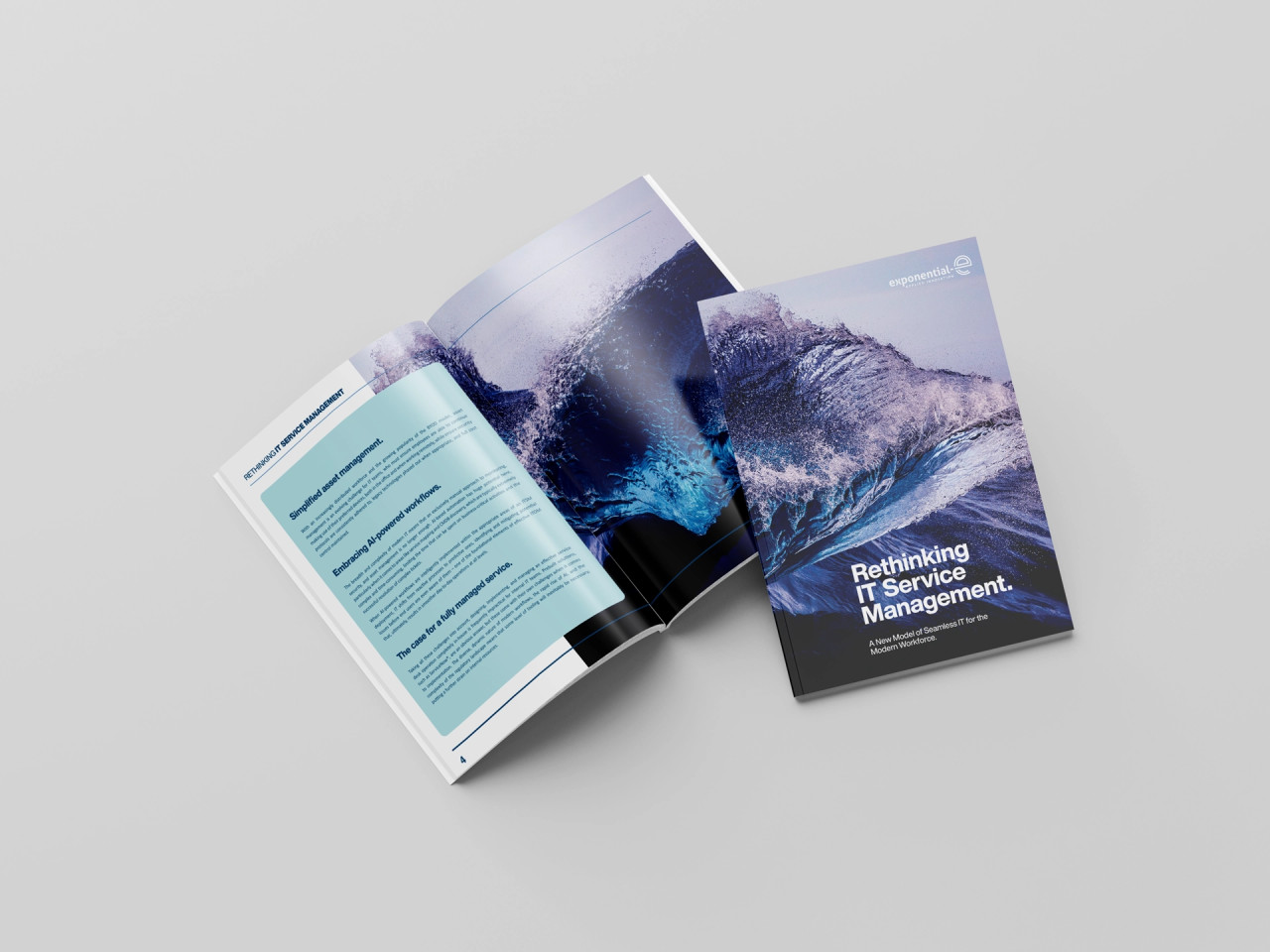
Rethinking IT Service Management
1642 Hits

The level of legacy debt varies widely across the NHS and a recent report from the Department of Science Technology and Innovation (DSIT) has revealed that legacy technology can range from as little as 10 to as much as 60-70%. This reliance on outdated systems presents a significant cyber security challenge, heightened by the fact that 15% of surveyed organisations could not estimate the size of their legacy estate. The report also highlights that these systems are high-risk, prone to security vulnerabilities, lack support, and subject to operational failures.
2010 Hits

From start-ups to global leaders, across the public and private sectors, organisations' ongoing growth and brand reputation rises or falls based on the quality of their networks. As a result, network transformation is a growing priority, with IT leaders looking to replace cumbersome legacy systems with flexible, scalable, and secure connections that support tomorrow's highly dynamic workflows.
3213 Hits

Security agencies in the United States have issued a new warning about the Black Basta ransomware group, in the wake of a high-profile attack against the healthcare giant Ascension.
117807 Hits

Although the sector as a whole has traditionally been comparatively wary of the ever-increasing pace of technology, legal services are increasingly data driven, with an abundance of AI-related discussion emerging within legal technology circles. The core Document Management Systems (DMS) and Practice Management Systems (PMS) remain the centre of focus for how and where to deploy a variety of rapidly maturing SaaS platforms, or dedicated, highly customised suites.
2424 Hits

To Test or Not to Test? - When it comes to IT disaster recovery and remediation processes, regular testing is not a 'nice to have' - it's absolutely essential!
This isn't hyperbole on my part. You just have to look at the news on any given day. We've all heard the horror stories of organisations in both the public and private sectors experiencing prolonged downtime during disasters due to inadequate preparation, lack of testing, and the unsuitability of their legacy remediation processes and systems.
2504 Hits

On the 18th March 2024, the Information Commissioner's Office issued its updated guidance around the issuing of fines when organisations have been found liable for the integrity of their customers' or end users' data being compromised. It is already well-established now that failure to ensure critical data remains secure will result in costly fines, as we have seen repeatedly in multiple high-profile cases over the years.
2661 Hits

With fundamental shifts in consumer behaviour, changing economic conditions, and a rapidly evolving regulatory environment, it's a challenging but exciting time for the UK's retail sector, and technology has a key role to play. In particular, advances in IT and networking solutions are empowering retailers to enhance their operational efficiency, improve the customer experience, and retain their competitive edge in an increasingly online and interconnected world.
3911 Hits

The nature of AEC projects and the high volumes of sensitive data firms generate, transfer, and store on a daily basis make them a natural target for cyber criminals. Indeed, a recent Government study found that 5% of building firms have already fallen victim to some form of cyber-crime in the just a year, but that 26% of them still did not have adequate cyber security measures in place.
2828 Hits

The way in which we consume content has changed forever. Physical media and prescheduled TV and radio have rapidly given way to the convenience, accessibility, and range offered by streaming services. Independent content creators share the digital stage with the most well-established industry leaders, and numerous organisations have embraced the mantra that 'content is king', utilising online video as a key tool for building engagement with their prospects and customers.
3893 Hits

For some years now, Cloud adoption has been steadily on the rise across the UK's Finance sector, with organisations including banks, insurers, and investment firms phasing out increasingly cumbersome legacy systems in favour of more scalable, agile, and cost-effective infrastructure. Indeed, more than 48% of UK banking services are now built on Cloud infrastructure.
3119 Hits

© 2026 Exponential-e Ltd. Reg. No. 04499567, Reg. Address:100 Leman Street, London E1 8EU