


The Finance sector has always been one of the most dynamic, rapidly evolving industries, and this shows no signs of changing any time soon. But while shifts in the landscape may well open new opportunities, they will also come with new challenges, and it is the organisations who are ready and able to face these head-on who will continue to thrive in the years ahead.
3220 Hits
The past few years have been challenging for the global Manufacturing sector, with both Brexit and COVID-19 creating a wide range of operational disruptions whose impact is still being felt. Indeed, as recently as January 2023, we saw UK manufacturing shrinking for the sixth consecutive month1.
3704 Hits
Manufacturing workflows are evolving at an unprecedented rate, and the trend shows no signs of slowing down. The increasing effectiveness and affordability of 'smart' technologies and the Internet of Things means IT and OT are increasingly interconnected, with increasing volumes of data flowing between sites and devices on an ongoing basis.
3008 Hits
Effective manufacturing workflows are all about doing things more efficiently - from the simplest tasks to the most complex. While this is an ostensibly simple concept, the increasingly interconnected, global nature of modern manufacturing workflows hides a number of challenges, with even the briefest period of downtime potentially costing thousands of pounds, particularly during periods of increased consumer demand.
However, the increasing sophistication of artificial intelligence (AI) and 'smart' technologies offers a rich vein of opportunities here, allowing routine processes to be automated, where possible and appropriate. Not only will this significantly improve the overall efficiency of manufacturing processes, if successfully executed, it will lead to long-term cost savings and free staff to focus their attention on activities that will lead to fresh innovations and sustainable business growth.
With that in mind, let's consider where AI-powered automation can be of most use across manufacturing workflows…
Streamlined, proactive maintenance processes
The rollout of interconnected sensors at manufacturing sites ensures any faults can be automatically tracked, identified, and escalated to the appropriate team, ensuring the resulting downtime can be kept to the absolute minimum. Beyond ensuring a swift response to any unexpected faults, collating the data generated by these sensors and applying machine learning technologies will allow any trends to be identified and routine maintenance processes adapted accordingly, helping to resolve potential faults before they occur and ensuring costly downtime can be avoided altogether.
And, as a bonus, this will help reduce machines' energy consumption in the long term, further reducing costs and bringing manufacturers another step closer to achieving their environmental goals!
Stress-free quality control
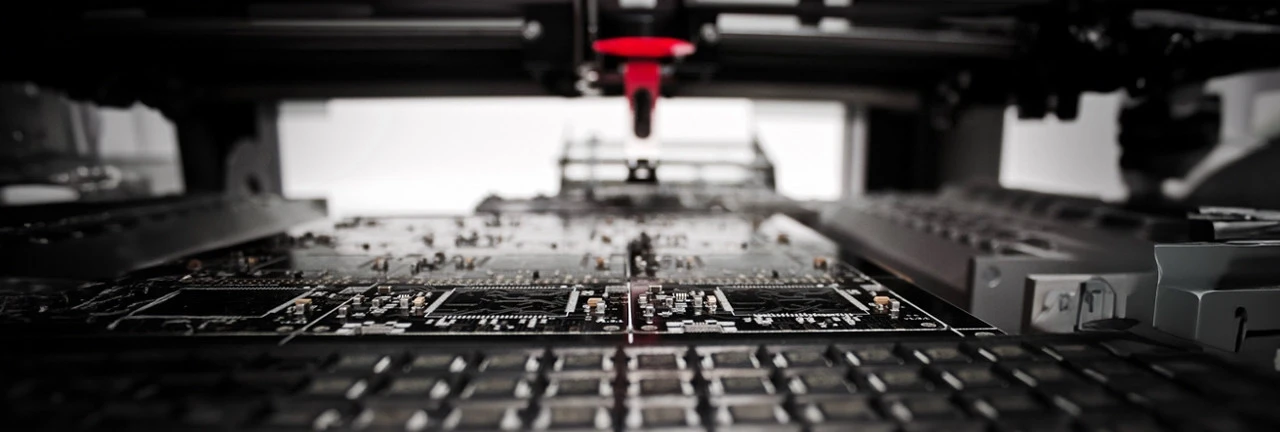
Even the most stringent quality control processes are vulnerable to human error, but AI will not only offer a greater level of consistency, but also allow products to be examined with a level of detail that would be impossible otherwise, particularly for especially small or complex products (computer chips, for example). This way, even the most miniscule defects can be quickly identified before products reach customers, even during the busiest production cycles.
Maximum control and visibility of global supply chains
The vast range of materials utilised across manufacturing operations that must be sourced from around the world means that supply chains are inherently complex. This means there is huge potential for disruption and, in turn, downtime if any area of the supply chain fails. But just as with the machines on factory floors, AI and smart sensors allow for micro and macro views of manufacturers entire supply chains, covering everything from vehicles to individual parts. By monitoring this data and implementing effective analytics, potential disruptions can be predicted and factored into project timelines.
Developing safer factory floors
Finally, amidst all the excitement about the possibilities offered by AI, let's not forget the people who continue to drive effective manufacturing operations! The smart sensors deployed across factory floors can be complemented with wearable sensors for employees. This will ensure the risk of injury from machinery is minimised, while simultaneously supporting wider health & safety initiatives, and thus helping maintain a safer working environment. For example, in environments where employees may be required to lift heavy objects, the data generated by the wearable sensors can be used to avoid injuries by ensuring correct procedures are followed when doing so.
This is all just scratching the surface of what AI-powered automation can potentially offer manufacturers. Leaders across the industry are already exploring the full potential of these technologies, with the support of trusted technology partners, so new opportunities and innovations are sure to keep revealing themselves in the months and years ahead. As we're already seeing in our own ongoing work with manufacturers across the UK, the rise of AI shows no signs of slowing down, so don't hesitate to contact us if you'd like to discuss how it can transform your own operations. It's an exciting time for the entire sector, and we look forward to exploring it with you!
View our Manufacturing brochure
Delivering the digital foundation for tomorrow's manufacturing workflows.
Discover our full portfolio of digital innovations for Manufacturing, and how we are working with leaders across the sector to support the ongoing convergence of IT and OT, the deployment of 'smart' technologies, and the implementation of tomorrow's connected workflows.
2553 Hits

© 2026 Exponential-e Ltd. Reg. No. 04499567, Reg. Address:100 Leman Street, London E1 8EU