


Powering seamless communication and collaboration for the UK's leading provider of high-performance sports support services
About the UK Sports Institute
Founded in 2002 under the name 'The English Institute of Sport', the UK Sports Institute (UKSI) provides leading-edge support for athletes competing in major worldwide sporting events, delivered by some of the world's leading practitioners, in close collaboration with coaches and performance directors.
Challenges
Given the nature of its work UKSI employees have always been highly dispersed, working closely with athletes and their teams, both onsite and at a number of regional performance centres. As a result, the organisation was an early adopter of the hybrid working model, designing and developing its ICT infrastructure in order to provide all employees with maximum flexibility in terms of how and where they work.
To this end, they have always worked closely with trusted managed service providers, with key services including LAN, WiFi, and a managed service desk. This culture of constant improvement eventually initiated a full Cloud transformation, for additional levels of control and scalability, and an early move towards Microsoft Teams as the primary platform for cross-site communication and collaboration.
In order to build on these successes, the UKSI made the decision to partner with an MSP who would not only be able to maintain its existing working model, but provide a dedicated team to provide hands-on support and guidance around future opportunities for improvement. To this end, a call for tenders was put out, with an emphasis on potential partners' willingness to delve deep into the UKSI's requirements and build a strong rapport with its teams.
Solution
Throughout a rigorous tender process, Exponential-e's readiness to work closely with the UKSI's own teams, clear understanding of their requirements and long-term business goals, and readiness to deliver truly bespoke solutions based on this quickly made a positive impression. As a result, Exponential-e was selected as the UKSI's new MSP.
A six-month handover period was established, in order to ensure a smooth transition, avoid any disruptions to employee's day-to-day work, and allow the dedicated account team time to establish themselves and get to know the UKSI's own teams, systems, and processes. This included the account team engaging directly with the incumbent supplier and working through the UKSI's comprehensive Operations Manual, in which all established systems and processes were clearly documented, while also minimising any overlap between suppliers and the extra costs that would result.
This clear communication and close collaboration between teams from both organisations ensured a seamless transition process, with Exponential-e able to take on the managed service desk function, providing employees at all levels of the UKSI with a single point of contact for any technical issues. End users reported no discontinuity between the old and news systems, ensuring disruption for all employees, wherever they were located, was avoided.
Since the final handover, the relationship between the UKSI and its dedicated account team at Exponential-e has continued to evolve. This has not been a simple case of maintaining the existing infrastructure, but also drawing on the expertise of Exponential-e's expert consultants and evolving range of professional services to develop the UKSI's internal expertise, drawing on an 'innovation fund' that was established at the outset of the contract.
This included hands-on technical support and consultancy during the change of name from 'The English Institute of Sport' to UKSI, ensuring all necessary updates within the Microsoft ecosystem had been properly executed prior to the designated launch date. Close collaboration between both teams ensured a completely seamless update across all systems, avoiding any unexpected disruptions.
Solution benefits
- A seamless transition process, with zero disruption of established processes or day-to-day operations
- A dedicated account team, providing hands-on support and helping maintain a culture of ongoing improvement
- A single point of contact for all technical issues, in the form of a fully managed service desk
- Access to world-class consultancy and professional services via a dedicated 'innovation fund'
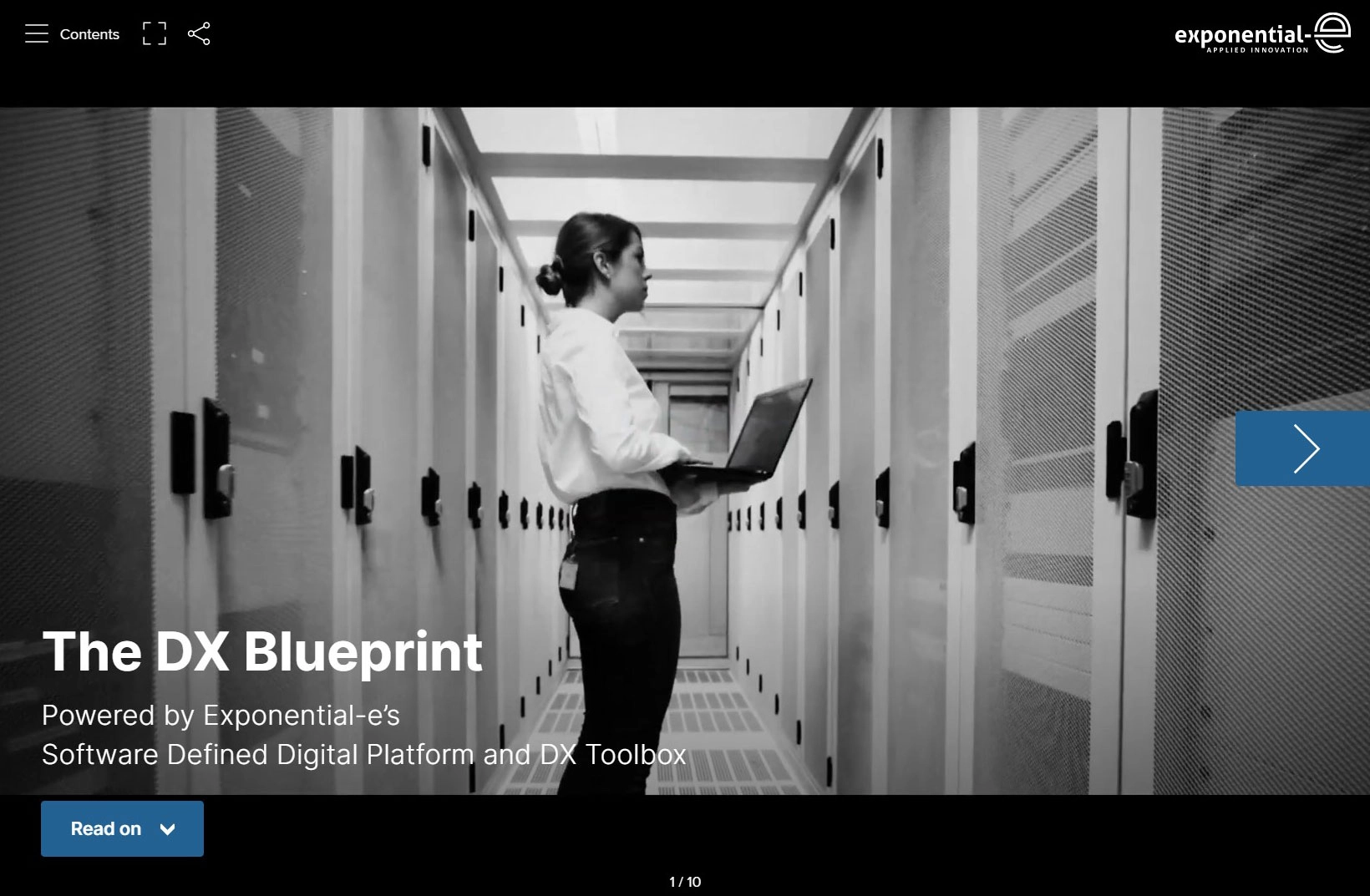
DX can empower your employees with always-available applications, wherever they are, and engage your customers with multiple touchpoints that can be accessed 24/7. It can also increase your company's growth, enabling you to adapt, to diversify and to transform your product to suit new market conditions.
5978 Hits

For organisations of any size, across any sector, seamless IT isn't a 'nice to have'; it's an essential part of efficient, secure operations and - in turn - sustainable business growth. In other words, establishing the right approach to service management is critical, so tickets are always assigned to the right resolver, and any issues can be resolved as quickly as possible. But as organisations scale up and their IT ecosystems naturally become more complex, with the requirements of multiple teams needing to be factored in, this often becomes easier said than done.
The natural solution is an IT Service Management (ITSM) platform, which intelligently automates multiple aspects of IT workflows - including incident, request, problem, and change management - and provides end users with a range of self-service options, including online portals and knowledge bases, typically based on the globally-recognised ITIL framework. However, for all the considerable advantages these platforms offer, their successful implementation frequently proves challenging for example:
- Designing a bespoke ITSM platform in-house is extremely complex and time-consuming, and so may not be practical for internal IT teams. As a result, as organisations scale up, they find themselves in an 'IT limbo', where a simple spreadsheet is no longer fit for purpose, but a full-scale ITSM deployment will not be achievable
- Most off-the-shelf ITSM platforms only offer limited scope for tooling, which can be a problem when highly specific compliance obligations must be adhered to
- If an organisation wishes to maintain its own, in-house resolvers (i.e. their internal IT team), relying on a third-party for ITSM services may prove problematic, as the provider may not wish to provide full access to their own system, as opposed to user access
Based on these challenges, it seems like what's needed is a solution to bridge the gap, allowing smaller IT operations to access the benefits of ITSM without the cost and complexity of a fully bespoke deployment. While this has been largely considered impossible for a number of years, our ongoing conversations with organisations already utilising our evolving portfolio of Managed IT solutions, we realised there had to be another way…
This was the impetus for our ITSM as-a-Service platform, which combines the industry-leading ServiceNow® platform with leading-edge domain separation technology within our own MSP environment. This makes all the benefits of robust ITIL capabilities readily accessible to IT environments of all sizes via proven, standardised approaches that take away the traditional complexity while still maintaining enough flexibility to accommodate most established workflows.
For example, if an organisation wishes to maintain its own resolvers, as in the example above, we are able to offer a fully separated instance to enable this, with tickets automatically distributed back to the designated agent.
We are able to take this further for organisations who predominantly work with third-party providers, seamlessly integrating our platform with the wider IT ecosystem without putting the integrity of critical data at risk. Tailored instances for specific tasks can also be implemented, if required.
In this way, we empower our customers to take their Managed IT ecosystems to the next level, with ITSM as-a-Service providing the tools to achieve greater control and visibility of their IT workflows, with ample room to scale and pivot as their requirements evolve.
The full range of benefits offered by this new model are already revealing themselves, with one NHS organisation's revamped service desk having achieved...
- 75% of IT tickets resolved at the first point of contact
- More than 5,000 gold ratings from end users
- An NPS raised from 57% to 90%
… but this is all part of a longer journey, where we reconsider IT's wider role across organisations, shifting perception of it from an ongoing financial burden to a powerful driver of business growth and innovation. However you wish to develop your IT workflows in response to your organisations' evolving requirements, get in touch today and take the first step towards making this a reality.
670 Hits

In just a few short years, the way we work has changed forever, with employees at all levels now working at home, in the office, and on the move, communicating and collaborating with customers and colleagues in ways that would have previously been inconceivable. However, as we have seen in recent months, with numerous high-profile cyber-attacks on corporate infrastructure, we can never allow ourselves to become complacent when it comes to the security of critical data. In other words, while we should certainly be ready to explore new models of working, the opportunities on offer must not blind us to potential cyber risks.
Let's consider, for example, the now ubiquitous Bring Your Own Device (BYOD) model…
The BYOD model simply means employees are allowed to utilise whichever devices they like for work purposes, utilising them to connect to corporate networks in and out of the office. While this concept has existed for some years now, the COVID-19 pandemic and the resulting lockdowns saw numerous organisations rush to implement the concept at scale, ensuring their employees could transition to remote working with minimal disruption.
While this was largely successful in terms of maintaining BAU as much as possible, in the years since lockdown, many organisations have found that these hastily implemented policies have introduced a number of challenges – some obvious, some less so – for internal IT teams.
These include:
- Allowing employees the freedom to use their
preferred devices without compromising the integrity of corporate
infrastructure
- Ensuring users' personal data is not inadvertently put at risk
- Maintaining full compliance with an evolving range of data protection regulations
- Ensuring a diverse range of devices and operating systems all receive the latest security updates as soon as they become available
- Ensuring corporate security policies are consistently enforced every time employees connect to the corporate network, without this requiring an impractical level of manual effort
All IT teams will already have systems and processes in place for asset management, ensuring corporate devices are kept secure throughout their lifespans and that users are equipped with whatever they need to best fulfil their roles. However, when employees are free to connect through whatever devices they like, control and visibility become increasingly difficult to maintain.
IT Service Management (ITSM) platforms must therefore evolve, providing IT teams with the tools they need to accommodate BYOD and other new ways of working without requiring the inherent cost and complexity of building a bespoke solution in-house.
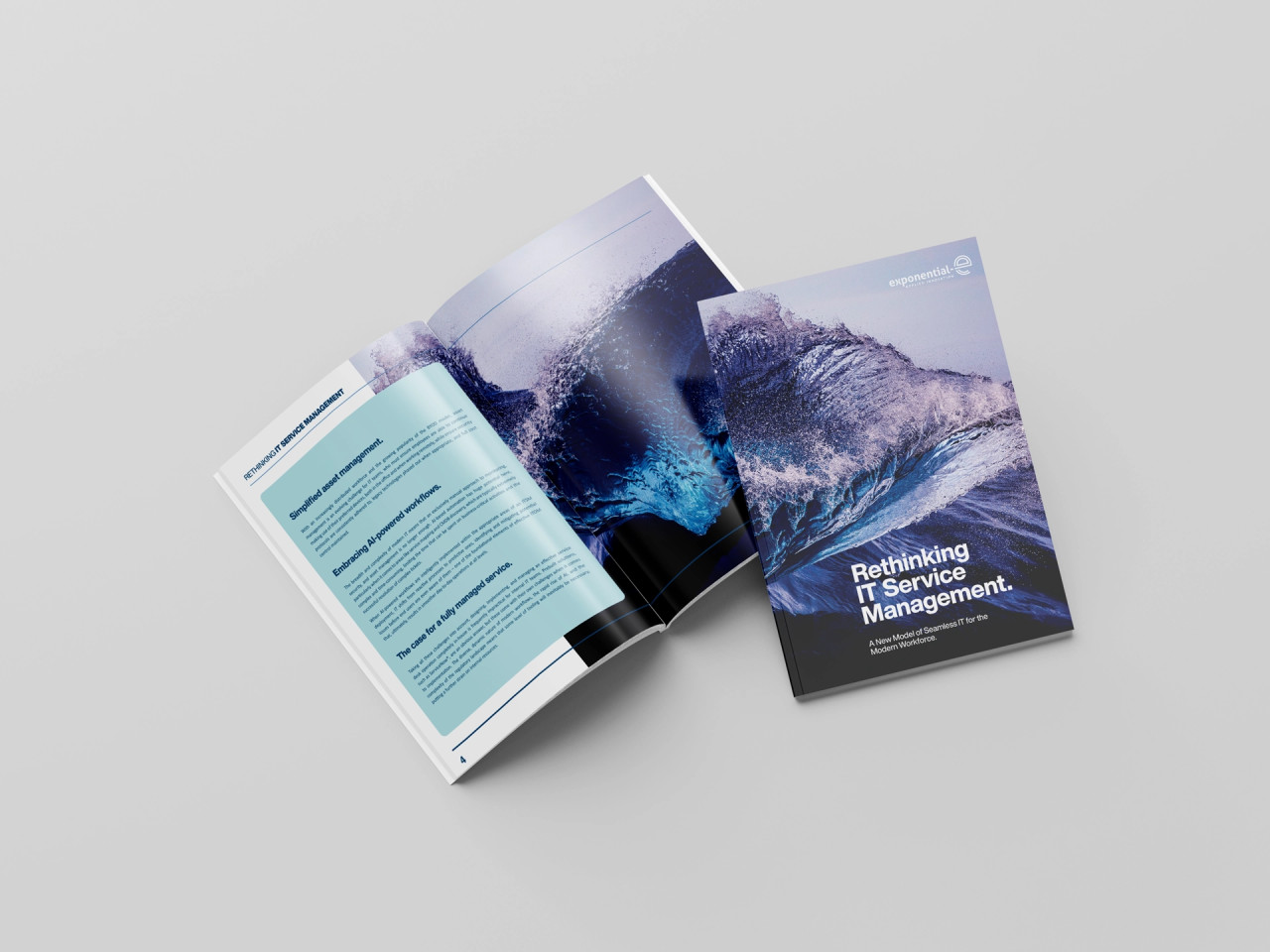
We explore these challenges in our latest report, Rethinking IT Service Management: A New Model of Seamless IT for the Modern Workforce, in which our IT experts posit a new approach that allows for a truly holistic view of all workflows while still providing employees with the flexibility to which they have become accustomed.

1243 Hits

The regulatory landscape is more complex than ever, with organisations across the public and private sectors having to meet an increasingly stringent range of obligations across all aspects of their services, including their IT ecosystems. Far from a box-ticking exercise, this is an essential part of strengthening business' overall security and resilience in the face of numerous aggressive, highly sophisticated cyberattacks. Indeed, as we closed out the first half of 2025, 67% of medium businesses and 74% of large businesses had experienced a breach or cyberattack of some description[1].
The evolution of the regulatory landscape is an appropriate response to these threats, helping minimise the risk of serious breaches affecting critical services that citizens depend on. To this end, G-Cloud bids require organisations to have IT Service Management (ITSM) tooling in place, in full compliance with the ITIL standard, without which they will be unable to bid on some of the most sought-after public sector contracts.
This presents a number of singular challenges for organisations, many of whom will not have the time, resources, or internal expertise to develop a bespoke ITSM platform in-house. However, most off-the-shelf platforms lack the flexibility required to accommodate the required tooling.
As a result, too many organisations will miss out on potentially lucrative business opportunities. But rather than treat these new compliance obligations as a burden, we should look at them as an opportunity to establish a new standard for ITSM deployments, ensuring they continue to form the foundation of seamless, secure IT that supports organisations' efficiency, innovation, and ongoing growth. This means a 'best of both worlds' scenario, where the cost efficiency and streamlined deployments of off-the-shelf solutions is combined with bespoke solutions' ability to accommodate the most rigorous compliance obligations.
This will require a whole new approach to
ITSM – one which we explore in depth in our latest report, Rethinking IT Service Management: A New Model of Seamless IT for the Modern Workforce. Inside, our own IT specialists explore the emerging challenges that successful ITSM deployments present to organisations, along with all the operational and business benefits that a world-class platform can open up. If you are in any doubt about whether your ITSM platform will remain fit for purpose in the years ahead, do not make any new investment until you have considered this information. Read the report now, and do not hesitate to get in touch if you would like to explore any aspect of your unique digital journey with our experts.
Don't Let Outdated Systems Leave You Exposed — The Future of Seamless IT Support
Modern ITSM is no longer optional - it's essential. The rise of remote work, tougher regulation, and growing cyber threats has exposed the limits of traditional, reactive systems. Weak workflows, lack of integration, and compliance gaps are risks that can't be ignored.
This whitepaper sets out a new framework: AI-powered automation, integrated security, and scalable architecture built for modern demands. It explains why compliance isn't a burden but a competitive necessity - especially in the public sector - and argues that expert delivery is just as important as the right tools.
Dive in if you want to future-proof your IT, protect your data, and avoid being caught out when the next crisis hits.
Rethinking IT Service Management
1642 Hits

© 2026 Exponential-e Ltd. Reg. No. 04499567, Reg. Address:100 Leman Street, London E1 8EU