

Exponential-e partners with Conscium to advance AI agent safety and adoption

Exponential-e and Conscium Partner to Advance Trusted AI Agents

The UK partnership sets a new benchmark for trusted AI deployment with advanced sovereign technology.

LONDON, 6th March 2026 - Exponential-e, the UK-based IT services company, has partnered with Conscium, a leading UK AI safety start-up, to accelerate trustworthy AI adoption across the public and private sectors.

The purpose of the collaboration is to advance AI agent assurance and governance capabilities, by bringing together Exponential-e's expertise in delivering secure, sovereign enterprise infrastructure, with Conscium's state-of-the-art AI verification capabilities. Together, the two companies will provide customers, including those in highly-regulated industries, with a robust framework to test, govern, and safely deploy AI agents in real-world environments.

The partnership comes as organisations across the world begin to deploy intelligent AI agents at scale, with billions of agents expected to be launched over the next few years. Research from Gartner found that 40% of all enterprise software applications are predicted to include task-specific AI agents by the end of 2026, up from just from under 5% in 2025.

Conscium's platform enables organisations to evaluate AI agents rigorously, before and during deployment, ensuring that they operate consistently as intended, and do not exhibit unsafe or unintended behaviours. The platform uses a multi-agent storyteller concept similar to gaming, with non-player characters (NPCs) testing the subject agent's ability to perform the role for which it has been designed.

The partnership builds on Exponential-e's recent appointment of Dr Daniel Hulme as Strategic Advisor. Dr Hulme is Founder and CEO of Conscium and brings extensive experience in building, assuring, and scaling advanced AI systems within complex environments.

Jonathan Bridges, Chief Innovation Officer at Exponential-e, said:

As organisations move from experimenting with AI to operationalising intelligent agents at scale, assurance becomes critical. It is no longer enough for AI systems to be powerful. They must be trustworthy, verifiable, and suitable for deployment in environments where security and sovereignty are essential.

Exponential-e works across a wide range of sectors and is trusted to deliver secure and resilient enterprise services at scale. Through this partnership with Conscium, we intend to accelerate our capability to support customers deploying AI agents safely and responsibly across both public and private sector environments.

Jonathan Bridges - Chief Innovation Officer at Exponential-e

Dr Daniel Hulme, co-founder and CEO of Conscium, and adviser to Exponential-e, said:

The UK has a real opportunity to lead in the development of trusted and sovereign AI. Exponential-e works with a large and diverse customer base and is trusted to operate at the heart of complex enterprise and public sector environments.

By enhancing Exponential-e's depth of industry experience with Conscium's expertise in agent verification and advanced AI research, we can help organisations move beyond experimentation and into the safe and effective deployment of intelligent agents that deliver meaningful outcomes."

Dr Daniel Hulme - co-founder and CEO of Conscium, and adviser to Exponential-e.

Ed Charvet, Co-founder at Conscium, said:

AI agents are rapidly evolving beyond proof-of-concept into autonomous systems capable of planning, decision-making, and real-world action. As deployment scales across enterprise environments, rigorous verification has become a foundational requirement. Organisations need certainty that agents will operate precisely as designed and remain within defined parameters.

Conscium's platform has been designed to support this next phase of adoption, enabling the verification of AI agents operating within secure and sovereign enterprise services across both public and private sector environments.

By combining specialist teams with deep experience in delivering secure, sovereign, and mission critical services, we are creating a transformative capability that helps organisations deploy AI agents safely, responsibly, and at scale.

Ed Charvet - co-founder at Conscium.

  155 Hits

The Cyber Adviser

The Cyber Adviser - An AI-powered Approach to Delivering Local Government Services

An AI-powered Approach to Delivering Local Government Services

The UK's local councils are challenged on a growing range of fronts. Budgets and resources are shrinking, but citizens' expectations around the quality and availability of the full range critical services must still be fulfilled, whether this involves making sure the bins are always collected on time, or ensuring the most vulnerable are able to access the support they need. Indeed, at the time of writing, one local council's list of services runs to seventeen pages, with over four-hundred individuals involved in their delivery.

Put simply, councils' frontline staff are being forced to do more with less, making these highly complex service environments prime candidates for intelligent automation. But, as is often the case when it comes to the deployment of agentic AI technologies - there's a lot to consider if the initial investment is to deliver the desired outcomes. Consider the following:

  • 66% of councils have trouble understanding where AI can deliver the greatest value.1
  • 43% of local councils saying the lack of clear use cases is a barrier to AI adoption.2


While many councils have already realised agentic AI's applications for purely transactional services (e.g. the payment of parking fines or council tax), it is clear that a deeper understanding of its potential applications is still needed.

One common misunderstanding around AI is that it is best used to replace human agents wherever possible, but this is a fatal misconception. This technology's full potential is as an enabler and enhancer of human expertise and experience, allowing frontline staff to consistently deliver their best while simultaneously ensuring their wellbeing is protected. 

Consider a list of services like the one we touched on at the beginning of this article - a quite typical service wrap for local Government organisations. No human agent could sensibly be expected to be able to deliver that many services, but at the same time, hiring individual specialists for every area is not going to be practical when doing more with less is the order of the day.

Agentic AI offers a third way, automatically putting the information and resources agents need to deliver successful resolutions right at their fingertips, without requiring them to manually parse complex knowledge libraries.

AI's ability to translate high volumes of data into an actionable form in real-time is unprecedented. Critically, this does not just have to mean formal knowledge bases that Government departments maintain themselves - it can also browse relevant websites, PDFs, and other sources of information, collating their findings in agents' dashboards in response to the most specific queries, including providing practical steps towards a resolution. This not only significantly eases the pressure on frontline staff, but can also reduce the time and expense involved in training new agents or broadening the capabilities of existing ones.

At Exponential-e, we're already working closely with a number of Government organisations (and numerous others from across the public and enterprise sectors) to bring these concepts to life and establish a clear standard of best practice around where and how agentic AI is implemented. These "cyber advisors", as they are increasingly called, are transforming the way local Government's contact centre environments operate, ensuring citizens enjoy the fastest possible resolutions, while simultaneously freeing up time and resources that can be reinvested in other public services.

Of course, this must all begin with the right foundation - specifically, a thorough assessment of an organisation's current customer journey, which will reveal where the implementation of agentic AI will bring the greatest possible benefits, and how the necessary changes can best be executed. Contact us today to arrange your own consultation and take the first step towards building your own team of world-class cyber advisors.

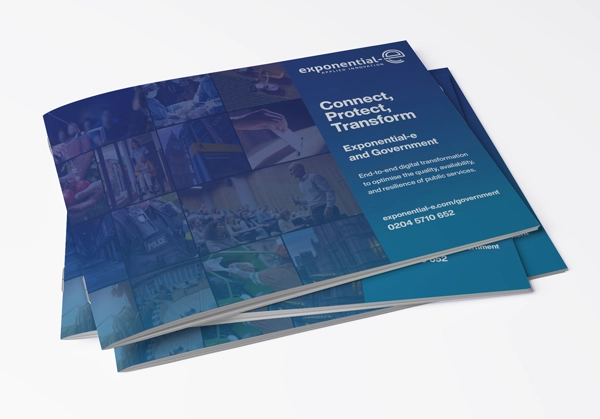
A secure digital foundation for better citizen outcomes, operational resilience, and long-term value.

Public sector organisations are under pressure to deliver more with less while meeting rising expectations for secure, always-available services. This guide shows how an integrated approach to connectivity, cloud, cyber security, and communications creates the resilience, scalability, and compliance government demands – turning digital strategy into real community impact.

  215 Hits

Compliance, cancellations, and the customer experience

DMCC compliance and the future of retail subscriptions

An exceptional customer journey extends far beyond the initial point of sale. And nowhere is this truer than for subscription-based businesses, whose continued success is based on delivering consistently seamless, high-quality experiences throughout each customer's time as a subscriber - from the initial sign-up through to the point where they decide to terminate their subscription for whatever reason.

Indeed, these new models have transformed the way many businesses interact with their customers, applying lessons learned from established subscription-based services, such as gyms and streaming services. From both traditional retailers and ecommerce specialists offering scheduled deliveries of household essentials, groceries, and entertainment products, to the now-ubiquitous software-as-a-service model and premium subscriber options on popular social media platforms, there are numerous channels for forward-thinking businesses to establish 'sticky' streams of income, with more still to reveal themselves.

However, the rules around offering and managing subscriptions and memberships of any sort are about to change, particularly with regards to cancellations…

Throughout 2026, the Competition and Markets Authority (CMA)'s regulations around buyer protection and autorenewals are going to evolve, as part of the existing Digital Markets, Competition and Consumers Act 2024 (DMCC Act), in order to help consumers avoid getting trapped in unwanted subscriptions. Organisations found to be in violation of these new regulations can expect to face fines of as much as 10% of their annual revenue.

As a result, any retailer that offers subscriptions or memberships of any kind must be aware of how these changes will impact them in the months ahead and, adapt their systems and processes to ensure they remain fully compliant with all applicable regulations, and - most importantly - ensure that they are still able to offer a world-class experience for their subscribers

So, what's about to change and how can we best prepare?

  • Specific pre-contract information must be provided. The DMCC Act distinguishes between key pre-contract information and full pre-contract information. Both must be provided in full at the initiation of the contract, or the customer will not be bound by the stated terms. Compulsory elements include:
  • Full details of payments, include frequency and amounts.
  • Minimum total liability.
  • Schedule of reminder notices.
  • Full cancellation rights.
  • Reminder notices will be compulsory. It is no longer enough to assume a customer will automatically want to renew their subscription. Reminder notices must be sent in advance of the renewal date.
  • Cooling-off periods will also be compulsory. This applies to both new subscriptions and renewals. Customers must have 14-day window to cancel their subscriptions without penalty.
  • Cancellations must be as simple as possible. Cancellation instructions must be provided, and the process must not include any unnecessary steps. This also applies to online subscriptions. Confirmation must be provided within 24 hours.

There's certainly a lot to consider here, but rather than treating these changes as onerous compliance obligations, why don't we treat them as an opportunity to reconsider the overall subscriber journey, and look for new opportunities to enhance it?

Traditionally, when a customer wishes to cancel a subscription or membership, they've done so by speaking to an agent, who will then have the opportunity to discuss their reasons for cancelling and potentially offer some perks to change their mind. In light of the changes mandated by the new DMCC, this is unlikely to be practical in the majority of cases, when customers are able to unsubscribe with a single click. This has the potential to create a serious loss leader for subscription-based businesses whose customer engagement strategy is based on an initial discount or free gift (e.g. the first month's delivery is free, after which the subscriber pays the usual rate), as there is nothing to stop customers hitting 'unsubscribe' right before their first payment is due.

However, with agentic AI and intelligent automation currently transforming both the contact centre environment and the wider customer journey, numerous opportunities have presented themselves to ensure full compliance can seamlessly co-exist with personalised experiences that maximise long-term retention and build brand loyalty.

For example, if someone is looking to cancel via a page on your website and you have already implemented a chatbot function that they use to request a cancellation, the bot can automatically engage a real customer service agent, who can discuss the reasons for their cancellation, provide any hands-on support they need, and (ideally!) offer any perks or resolutions that will entice them to stay.

If your contact centre environment and chatbot functions have been intelligently integrated (as they should be!), these interactions can then be utilised to drive further optimisations, such as ensuring cancellation requests are routed to agents who have the best records of retaining customers, or ensuring agents don't invest their time and effort on accounts that have no realistic chance to renewing their subscriptions. For example, AI-based analytics can identify trends in customer data, such as individual addresses that have signed up for multiple trials but never made a purchase, which will allow agents to focus their attention where it will prove most effective.

And of course, the best approach to minimising cancellations is ensuring customers never want to cancel to begin with! All the data gather through customer interactions - whether it's with an agent or chatbot - can help build up more accurate, comprehensive customer personas that support highly personalised offers, helping to maximise the number of subscription renewals.

Above all, while regulations evolve and customer expectations naturally shift, the value of a personalised experience, delivered by an attentive, knowledgeable professional is a constant for the Retail sector. If we keep this in mind while making full use of the possibilities AI-powered automation offers us, the opportunities will be tremendous.

If you'd like to take a deep dive into your own customer journey and identify where the intelligent application of new technologies could make that all-important difference, just get in touch.

Exponential-e & Retail

Our Retail brochure offers a comprehensive overview of how we draw on a deep understanding of the sector's singular challenges, an evolving technology ecosystem, and a highly consultative approach to offer bespoke solutions that help staff deliver their best for every customer - both online and in person.

  328 Hits

Exponential-e named Five9’s EMEA Partner of the Year

Exponential-e named Five9’s EMEA Partner of the Year.

Exponential-e's UX & CX teams were recently named Five9's EMEA Partner of the Year at its 2025 Global Partner Awards ceremony in Las Vegas, acknowledging the partnerships ongoing work throughout the year to transform CX across the entire region, making full use of leading-edge AI and automation technologies.

Five9 is the world leader in contact centre software utilising next-gen solutions to help transform these environments into the focal points of organisations' customer engagement strategies. Exponential-e utilises Five9's platforms as key elements of its Contact Centre as-a-Service solution, empowering teams to intelligently automate their workflows in a way that ensures agents are always fully supported, delivering quick resolutions and seamless customer experiences.

Gareth Hayes - Exponential-e's Director of UX & CX - commented:

This award reflects the hard work teams from both Exponential-e and Five9 put in throughout 2025, helping to establish the new breed of AI-powered customer experience as the new standard across multiple sectors. While the agentic AI's potential in the contact centre is enormous, its successful implementation always depends on the right blend of the right technologies and human agents' experience and expertise. This has been the driving force behind our own CCaaS solution and the success of our partnership with Five9. The team and I are immensely proud of this award and look forward to working with Five9 in the years ahead, bringing more CX innovations to market.

Gareth Hayes

Kim Hill - SVP for Partners at Five9 commented: 

We're thrilled to recognise Exponential-e as our EMEA Partner of the Year. Their continued commitment, technical expertise and close collaboration with our regional teams have made a real impact, driving significant growth, new customer wins, and innovative delivery across EMEA. It's a true partnership, and we look forward to what we can achieve together next.

Kim Hill
  236 Hits

Fully Managed Services on Microsoft Azure Ecosystem

Fully Managed Services on Microsoft Azure Ecosystem

The Challenge

The Customer was working through a partnership disaggregation from a consortium IT Service to regain IT autonomy, underpinned by a strategic MSP partnership to augment limited in-house IT skills. The Customer went to market to seek a single supplier to accelerate the immediate requirement and support their long-term digital strategy to modernise IT with 'better use of data for insights and improvements'. With data sovereignty being a key concern for the Customer, a UK-based service provider was essential.

The Solution 

The Customer engaged Exponential-e to deliver a fully managed IT service, including:


The full stack solution provided excellent value to the Customer, allowing them to accelerate the disaggregation through a single supplier partnership.

The solution was fully delivered by Exponential-e delivery services - Project Management, Azure Migration Specialists, User Specialists, Service Management and Onboarding Teams over a period of eight months. This ensured the project was delivered on time and budget to meet the transition targets defined by the Customer.

Solution Benefits

  • Deployment and configuration of CAF-aligned Azure Landing Zones.
  • Azure Migrate-based migration of Windows Server and Linux Virtual Servers to Azure.
  • Migration of 9TB file data to Azure Files.
  • Infrastructure resiliency with Azure Site Recovery and Azure Backup.
  • Deployment of Intune and MEM for unified device management.
  • Unified identity services through Microsoft Entra.
  • Cloud Backup for Microsoft 365.
  • Seamless cutover of user support services.
  • Optimised wireless network coverage within key user locations.
  • Three-Year Azure Savings Plan for cost control over contract terms.


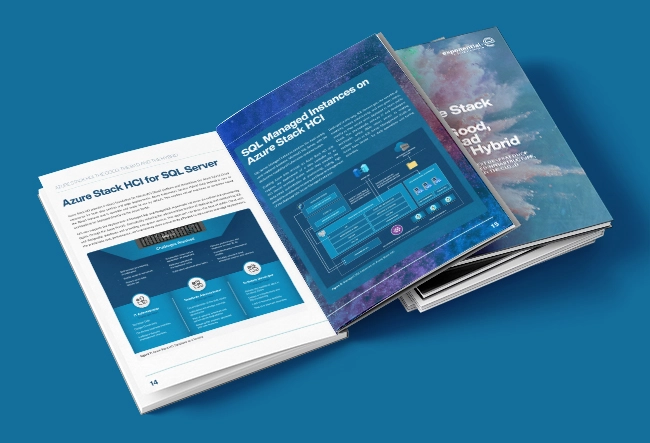
Azure Stack HCI
The Good, The Bad & The Hybrid

In this exclusive whitepaper from Exponential-e's Cloud transformation specialist, James Pearce, discover how the next generation of hyperconverged infrastructure is transforming the way organisations design, deploy, and manage cutting-edge IT infrastructure, along with a proven roadmap for its successful implementation.

  417 Hits

Bridging the ITSM divide - the case for an ‘as-a-Service’ model

Bridging-the-ITSM-divide---the-case-for-an-as-a-Service-model

For organisations of any size, across any sector, seamless IT isn't a 'nice to have'; it's an essential part of efficient, secure operations and - in turn - sustainable business growth. In other words, establishing the right approach to service management is critical, so tickets are always assigned to the right resolver, and any issues can be resolved as quickly as possible. But as organisations scale up and their IT ecosystems naturally become more complex, with the requirements of multiple teams needing to be factored in, this often becomes easier said than done.

The natural solution is an IT Service Management (ITSM) platform, which intelligently automates multiple aspects of IT workflows - including incident, request, problem, and change management - and provides end users with a range of self-service options, including online portals and knowledge bases, typically based on the globally-recognised ITIL framework. However, for all the considerable advantages these platforms offer, their successful implementation frequently proves challenging for example:


  • Designing a bespoke ITSM platform in-house is extremely complex and time-consuming, and so may not be practical for internal IT teams. As a result, as organisations scale up, they find themselves in an 'IT limbo', where a simple spreadsheet is no longer fit for purpose, but a full-scale ITSM deployment will not be achievable

  • Most off-the-shelf ITSM platforms only offer limited scope for tooling, which can be a problem when highly specific compliance obligations must be adhered to

  • If an organisation wishes to maintain its own, in-house resolvers (i.e. their internal IT team), relying on a third-party for ITSM services may prove problematic, as the provider may not wish to provide full access to their own system, as opposed to user access

Based on these challenges, it seems like what's needed is a solution to bridge the gap, allowing smaller IT operations to access the benefits of ITSM without the cost and complexity of a fully bespoke deployment. While this has been largely considered impossible for a number of years, our ongoing conversations with organisations already utilising our evolving portfolio of Managed IT solutions, we realised there had to be another way… 

This was the impetus for our ITSM as-a-Service platform, which combines the industry-leading ServiceNow® platform with leading-edge domain separation technology within our own MSP environment. This makes all the benefits of robust ITIL capabilities readily accessible to IT environments of all sizes via proven, standardised approaches that take away the traditional complexity while still maintaining enough flexibility to accommodate most established workflows.

For example, if an organisation wishes to maintain its own resolvers, as in the example above, we are able to offer a fully separated instance to enable this, with tickets automatically distributed back to the designated agent.

We are able to take this further for organisations who predominantly work with third-party providers, seamlessly integrating our platform with the wider IT ecosystem without putting the integrity of critical data at risk. Tailored instances for specific tasks can also be implemented, if required.

In this way, we empower our customers to take their Managed IT ecosystems to the next level, with ITSM as-a-Service providing the tools to achieve greater control and visibility of their IT workflows, with ample room to scale and pivot as their requirements evolve. 

The full range of benefits offered by this new model are already revealing themselves, with one NHS organisation's revamped service desk having achieved... 

  • 75% of IT tickets resolved at the first point of contact
  • More than 5,000 gold ratings from end users
  • An NPS raised from 57% to 90%

  … but this is all part of a longer journey, where we reconsider IT's wider role across organisations, shifting perception of it from an ongoing financial burden to a powerful driver of business growth and innovation. However you wish to develop your IT workflows in response to your organisations' evolving requirements, get in touch today and take the first step towards making this a reality.

  385 Hits

The new data sovereignty… and why you can’t afford to neglect it

The new data sovereignty… and why you can’t afford to neglect it

In today's interconnected society, our data is a fundamental part of our personal and professional lives, informing everything from the way we communicate and collaborate with our colleagues to the way we do our weekly shop. Seamless, secure flows of data have transformed the way we access many critical services and helped bring a rich vein of new innovations to market, but as with any period of intensive technological evolution, these benefits have come at a price…

In a highly unpredictable geopolitical landscape, the growing volumes of data created, stored, and transferred by public sector and enterprise organisations present an extremely attractive target for bad actors, as does corporations' intellectual property and citizens' personal data. It's unsurprising that organisations across the public and private sectors are treating the continued integrity of their data as a critical priority – not only to avoid the financial and reputational consequences of a breach, but also to provide customers and prospects with assurance that their critical data will always be protected, both at rest and in transit.

Data sovereignty is a key part of this journey, by which we mean – in the broadest sense – guarantees over the geographical locations in which data may be stored. Most technology providers will already have such guarantees in place, typically involving the location of their hosting environments. However, with the now near-ubiquity of Cloud platforms and the growing complexity of security and compliance, the nature of true data sovereignty is no longer so clear. 

With this in mind, consider the following questions when evaluating Cloud providers…

Is your Cloud provider fully incorporated in your desired location? While they may maintain hosting environments there, can they say the same for the Cloud platforms you will be utilising, particularly if they are operating as part of a larger umbrella company? If not, you cannot guarantee that your data will remain within the country when in transit, which may lead to compliance and security issues

Will they maintain full jurisdictional control of all data? Related to the above point, with several governments having now implemented regulations that grant them access to data stored in Cloud platforms (e.g. the US Cloud Act), providers must be able to guarantee that customer data will never be subject to such overreach. This is especially critical for any sort of public sector data, particularly Government and defence.

Can they specify which personnel have access to their Cloud platforms? Again, all engineers who will be maintaining the Cloud platform and acting on behalf of customers must be based in their sovereign nation, with the appropriate clearances and certifications in place.

Does their data sovereignty extend to their disaster recovery and business continuity practices? The sovereignty of data centres must extend to back-up environments, which must also be located in the designated geographical region, with air gapping, data encryption, and zero-trust security measures utilised as appropriate, and all of this subject to annual audit. 

This is why Exponential-e has continued to develop our ability to guarantee true data sovereignty, in direct response to the evolving digital and geopolitical landscapes. To this end, we were recently certified as a VMware Sovereign Partner, reflecting our ability to provide complete assurance around the sovereignty and control of digital assets. The are multiple dimensions to this, including our hosting facilities, support, management, regional jurisdictions, security clearances, and ability to deliver complementary services, such as Bring Your own Key (BYoK) and both shared and dedicated Cloud environments. As a proudly UK-based company for more than twenty years, our full range of solutions is designed with true sovereignty inherent in the design – something we continue to develop in response to the latest regulations, geopolitical shifts, and security challenges.

If you are in any way concerned about the sovereignty of your data and your key platforms, do not hesitate to reach out to our team, who will guide you through these challenges, ensuring you can continue your Cloud journey with complete peace of mind.

  474 Hits

Exponential-e appoints Dr Daniel Hulme as Strategic Advisor to accelerate end-to-end AI capabilities

Exponential-e appoints Dr Daniel Hulme as Strategic Advisor to accelerate end-to-end AI capabilities

Exponential-e has announced the appointment of globally recognised AI specialist Dr Daniel Hulme as Strategic Advisor. This marks a significant step in the company's evolution, building on its established strength in the secure platforms, connectivity, and high-performance compute that underpin modern intelligent systems, and enabling it to serve as a trusted partner in the design and delivery of fully assured, end-to-end AI capabilities.

In his new role, Dr Hulme will work closely with teams across the Exponential-e Group to support this journey, shaping assured, outcome-driven AI systems that can operate safely and effectively at scale. This includes agent assurance, advanced algorithm generation, and the design, deployment, and governance of transformational solutions within complex and highly regulated environments.

Dr Hulme is a globally recognised AI scientist, entrepreneur, and investor. He is widely recognised as one of the Top 10 Chief AI Officers worldwide for his work at WPP, following its acquisition of Satalia in 2021. He is also recognised for creating and scaling sovereign AI businesses that have delivered measurable value in enterprise environments, including Faculty (which Accenture has agreed to acquire) and Conscium – a research organisation focused on the rise of machine consciousness and the long-term implications of increasingly autonomous AI systems. This track record underlines his ability to take advanced AI capabilities beyond the research and engineering phases to deliver large-scale commercial and operational impact.

Alongside his commercial work, Dr Hulme serves on the Impact Board of the University of St Andrews Computer Science, where his work focuses on the business, ethical, and societal impact of advanced technologies, advocating for their responsible adoption. He is also a highly regarded keynote speaker, advising governments and enterprises globally on the future of AI.

 Commenting on the appointment, Jonathan Bridges, Chief Information Officer at Exponential-e, said:

AI has moved beyond experimentation. From intelligent agents to next generation customer experiences, organisations now require AI systems that are not only powerful, but assured, explainable, and suitable for real world deployment.

I have worked with Daniel for more than 20 years, and his depth of expertise across research, engineering, and large-scale delivery is exceptional. His involvement will help us convert raw AI capability into trusted solutions that deliver measurable outcomes, even in the most challenging environments.

Jonathan Bridges

Exponential-e works with a large and diverse customer base across the UK economy, spanning sectors such as healthcare, critical national infrastructure, defence, and professional services. What stands out is the level of trust placed in the organisation to deliver secure, sovereign, and resilient digital platforms at scale.

As AI becomes more embedded in core operations, particularly in regulated and mission-critical environments, organisations need partners that can combine deep infrastructure capability with assured, responsible AI development. Exponential-e is uniquely positioned in this regard, with the foundations, governance, and customer reach already in place.

I am looking forward to working with the team to help evolve that strong platform and compute capability into end-to-end AI systems that are trustworthy, explainable, and capable of delivering meaningful transformation across multiple sectors of the UK economy.

Dr Hulme

With this appointment, Exponential-e reinforces its position as a trusted partner that not only delivers AI's underlying foundation, but enables organisations across the UK to design, assure, and operationalise the full range of its capabilities.

Dr Hulme will be a keynote speaker at a planned London event in April, sharing his insights into unlocking this technology's true business value.  

  322 Hits

A new approach to student welfare and retention in the era of AI

AI-powered student welfare and retention in higher education
Our universities are currently challenged on multiple fronts. Most obviously fees have been frozen for some years now while salaries continue to rise, leading to extreme financial pressure. At the same time, competition from international universities is fierce, particularly when it comes to attracting students from abroad. As such, it is essential that our universities are not only able to attract new students, but also retain them throughout the duration of their studies, and potentially on to post-grad work.
  476 Hits

Reconsidering how we design, deploy, and manage hybrid Cloud for the best possible ROI

Reconsidering how we design, deploy, and manage hybrid Cloud for the best possible ROI
Across both the public and private sectors, organisations have been accelerating their Cloud transformation plans for more than a decade now. What began as a rather niche technology has now become an intrinsic part of enterprise infrastructure, to the extent virtually every organisation utilises Cloud platforms of some description. And that's great! As the past seventeen years have demonstrated, there are numerous advantages to Cloud adoption, from the inherent scalability and agility to the potential for enhanced security across the most highly distributed infrastructure.
  662 Hits

When is ‘sovereign’ truly sovereign?

When is ‘sovereign’ truly sovereign?
A new approach to managing and hosting critical data in support of the UK's Defence and national security

In a comparatively short space of time, the integrity of the UK's data has become a top priority for our Defence sector, with bad actors mounting an increasingly sophisticated range of attacks to disrupt critical services, potentially putting lives at risk and compromising our national security.
  901 Hits

Seamless guest experiences demand seamless, AI-powered communication

Seamless guest experiences demand seamless, AI-powered communication
Across the hospitality sector, the new breed of interconnected guest experience means that expectations are at an all-time high. New opportunities to deliver truly personalised experiences that help brands establish their place in the public consciousness continue to reveal themselves, but the resulting pace of digital transformation means that these inevitably come with new challenges. With multiple channels now typically involved in each guest's journey - from booking to arrival, checkout, and beyond - many hospitality professionals are finding themselves short-staffed, unable to manage the growing complexity of their day-to-day operations.
  1185 Hits

What the Global Cloud Outage Taught Us About True Continuity

global-cloud-outage-business-continuity-insights

The question every leader should ask this week:
"If my Cloud provider went down tomorrow, would my business stay online and remain trading?"
If the answer isn't a confident "yes," it's time to reconsider your business continuity strategy...

Recent outages from AWS (20-10-25) and Azure (30-10-25) left global organisations offline for hours. Critical applications went dark, disrupting entire operations, along with the associated revenue streams and the cost of a workforce unable to work!

  1873 Hits

A seamless digital transformation process, powered by Microsoft Azure, delivers tangible cost savings and efficiencies

case-study-microsoft-azur_20251030-125229_1

The Challenge

The customer embarked on a strategic digital transformation by migrating critical business systems from fragmented on-premises infrastructure to Microsoft Azure. This transition would not only modernise their IT operations across five European countries but also deliver significant financial savings and operational efficiencies through smart licensing and resource planning.

Throughout the transformation process, the customer faced challenges with maintaining disparate legacy systems across multiple locations, which led to inefficiencies, high operational costs, and limited scalability. They needed a unified, secure, and scalable Cloud platform to support business growth and enable remote working capabilities.

The Solution 

The customer engaged Exponential-e to deliver a phased Azure migration strategy, including:


The migration was executed in stages across five European and UK locations, using a combination of rehosting and rebuilding application servers. Microsoft technologies such as Azure Migrate, Azure Backup, Azure Site Recovery, and Azure Virtual Desktop were key enablers. 

The project was delivered collaboratively between the customer's internal IT team and Exponential-e's consultants, ensuring alignment with business goals and knowledge transfer. The approach followed Microsoft's Cloud Adoption Framework, ensuring best practices in governance, security, and operational readiness. The successful implementation positioned the customer for future innovation and growth on a modern Cloud foundation.

Solution Benefits

  • Migration of 38 Virtual Machines to Azure.
  • Implementation of 2 x 100TB GRS Reserved Backup Instances.
  • Licensing of 48 x SQL Server Standard (two Core Packs).
  • Licensing of 22 x Windows Server 2022 Datacentre (eight Core Packs).
  • Overall savings of £100,000 on Azure spend through strategic use of Microsoft Savings Plans and Reserved Instances.
  • Improved governance, scalability, and remote working capabilities.
  • Consolidation of infrastructure across five countries into a single Cloud platform .


Azure Stack HCI
The Good, The Bad & The Hybrid

In this exclusive whitepaper from Exponential-e's Cloud transformation specialist, James Pearce, discover how the next generation of hyperconverged infrastructure is transforming the way organisations design, deploy, and manage cutting-edge IT infrastructure, along with a proven roadmap for its successful implementation.

  1539 Hits

Modern workflows are highly flexible and truly interconnected, which means IT Service Management must be as well

ITSM-Modern-Workflows_BlogHeade_20251028-091516_1

Traditionally, different aspects of organisations' IT ecosystems have been highly siloed, with little interaction between different areas. For example, organisations' HR systems would have no reason to connect with their contact centre environments and so would be managed independently, via segregated systems and processes. However, the ways in which we communicate and collaborate have fundamentally changed in recent years. Disparate systems are now highly interconnected, with ever-growing volumes of data flowing between them on an ongoing basis.

  1294 Hits

Vodafone blackout highlights urgent need to optimise the security and resilience of critical infrastructure

Vodafone-Outage_BlogHeader

On Monday 13th October, Vodafone customers experienced a blackout of internet and mobile services, with more than 130,000 reports flagged to web outage monitors. In many cases, business users reported they had been left unable to trade, or even communicate with colleagues or customers, throughout the outage, leading to a demonstrable loss of profits. This included other telecoms providers utilising Vodafone's network, who were similarly affected.

  1356 Hits

The best of all worlds: embracing the BYOD model without putting critical data at risk

ITSM-BYOD-Webp

In just a few short years, the way we work has changed forever, with employees at all levels now working at home, in the office, and on the move, communicating and collaborating with customers and colleagues in ways that would have previously been inconceivable. However, as we have seen in recent months, with numerous high-profile cyber-attacks on corporate infrastructure, we can never allow ourselves to become complacent when it comes to the security of critical data. In other words, while we should certainly be ready to explore new models of working, the opportunities on offer must not blind us to potential cyber risks.

Let's consider, for example, the now ubiquitous Bring Your Own Device (BYOD) model…

The BYOD model simply means employees are allowed to utilise whichever devices they like for work purposes, utilising them to connect to corporate networks in and out of the office. While this concept has existed for some years now, the COVID-19 pandemic and the resulting lockdowns saw numerous organisations rush to implement the concept at scale, ensuring their employees could transition to remote working with minimal disruption.

While this was largely successful in terms of maintaining BAU as much as possible, in the years since lockdown, many organisations have found that these hastily implemented policies have introduced a number of challenges – some obvious, some less so – for internal IT teams.

These include:

  • Allowing employees the freedom to use their preferred devices without compromising the integrity of corporate infrastructure  
  • Ensuring users' personal data is not inadvertently put at risk
  • Maintaining full compliance with an evolving range of data protection regulations
  • Ensuring a diverse range of devices and operating systems all receive the latest security updates as soon as they become available
  • Ensuring corporate security policies are consistently enforced every time employees connect to the corporate network, without this requiring an impractical level of manual effort

All IT teams will already have systems and processes in place for asset management, ensuring corporate devices are kept secure throughout their lifespans and that users are equipped with whatever they need to best fulfil their roles. However, when employees are free to connect through whatever devices they like, control and visibility become increasingly difficult to maintain.

IT Service Management (ITSM) platforms must therefore evolve, providing IT teams with the tools they need to accommodate BYOD and other new ways of working without requiring the inherent cost and complexity of building a bespoke solution in-house.

We explore these challenges in our latest report, Rethinking IT Service Management: A New Model of Seamless IT for the Modern Workforce, in which our IT experts posit a new approach that allows for a truly holistic view of all workflows while still providing employees with the flexibility to which they have become accustomed. 

  983 Hits

Compliance cannot be an afterthought – it must be inherent in the design of all IT Service Management platforms

Compliance cannot be an afterthought – it must be inherent in the design of all IT Service Management platforms

The regulatory landscape is more complex than ever, with organisations across the public and private sectors having to meet an increasingly stringent range of obligations across all aspects of their services, including their IT ecosystems. Far from a box-ticking exercise, this is an essential part of strengthening business' overall security and resilience in the face of numerous aggressive, highly sophisticated cyberattacks. Indeed, as we closed out the first half of 2025, 67% of medium businesses and 74% of large businesses had experienced a breach or cyberattack of some description[1]

The evolution of the regulatory landscape is an appropriate response to these threats, helping minimise the risk of serious breaches affecting critical services that citizens depend on. To this end, G-Cloud bids require organisations to have IT Service Management (ITSM) tooling in place, in full compliance with the ITIL standard, without which they will be unable to bid on some of the most sought-after public sector contracts.

This presents a number of singular challenges for organisations, many of whom will not have the time, resources, or internal expertise to develop a bespoke ITSM platform in-house. However, most off-the-shelf platforms lack the flexibility required to accommodate the required tooling.

As a result, too many organisations will miss out on potentially lucrative business opportunities. But rather than treat these new compliance obligations as a burden, we should look at them as an opportunity to establish a new standard for ITSM deployments, ensuring they continue to form the foundation of seamless, secure IT that supports organisations' efficiency, innovation, and ongoing growth. This means a 'best of both worlds' scenario, where the cost efficiency and streamlined deployments of off-the-shelf solutions is combined with bespoke solutions' ability to accommodate the most rigorous compliance obligations.

This will require a whole new approach to

ITSM – one which we explore in depth in our latest report, Rethinking IT Service Management: A New Model of Seamless IT for the Modern Workforce. Inside, our own IT specialists explore the emerging challenges that successful ITSM deployments present to organisations, along with all the operational and business benefits that a world-class platform can open up. If you are in any doubt about whether your ITSM platform will remain fit for purpose in the years ahead, do not make any new investment until you have considered this information. Read the report now, and do not hesitate to get in touch if you would like to explore any aspect of your unique digital journey with our experts.

Don't Let Outdated Systems Leave You Exposed — The Future of Seamless IT Support

Modern ITSM is no longer optional - it's essential. The rise of remote work, tougher regulation, and growing cyber threats has exposed the limits of traditional, reactive systems. Weak workflows, lack of integration, and compliance gaps are risks that can't be ignored.

This whitepaper sets out a new framework: AI-powered automation, integrated security, and scalable architecture built for modern demands. It explains why compliance isn't a burden but a competitive necessity - especially in the public sector - and argues that expert delivery is just as important as the right tools.

Dive in if you want to future-proof your IT, protect your data, and avoid being caught out when the next crisis hits.

Rethinking IT Service Management
  1435 Hits

Retail is a prime target for cyberattacks… but it’s time to fight back

Retail is a prime target for cyberattacks… but it’s time to fight back

Traditionally, retailers' biggest security concern has been theft, and so CCTV systems evolved to ensure shoplifters could be identified as quickly as possible and stock shrinkage minimised, forming a foundational element of on-site infrastructure. However, as retailers expanded their operations and looked to achieve seamless communication and interoperability between sites and warehouses, the security concern grew to include data theft, and so secure, resilient connectivity became a key priority.

  1028 Hits

Germany charges hacker with Rosneft cyberattack in latest wake-up call for critical infrastructure

Germany charges hacker with Rosneft cyberattack in latest wake-up call for critical infrastructure

A 30‑year‑old man has been charged with launching a cyberattack on the German subsidiary of Russia's state-owned oil giant Rosneft. The cyberattack, which happened in March 2022 in the aftermath of Russia's invasion of Ukraine, crippled the company's operations and cost millions of euros in damages.

  2968 Hits

Click here to find out more about all of Exponential-e's accreditations.
© 2026 Exponential-e Ltd. Reg. No. 04499567, Reg. Address:100 Leman Street, London E1 8EU