


The digital launchpad for life-changing training and apprenticeships
About JTL
Operating across England and Wales, JTL offers world-class training and apprenticeships in the fields of electrics, plumbing, and heating, providing aspiring tradespeople with the launchpad for successful, long-lasting careers.
Solution
Exponential-e's self-owned, enterprise-class network is the foundation of JTL's IT infrastructure, and - in turn - much of the training they deliver. Scalability is a critical factor here, ensuring new training sites can be opened and closed down as seamlessly as possible. New sites are typically deployed every 2-3 months, with sixteen sites in operation around England and Wales at the time of writing, and four more currently in the works.
This is highly scalable, highly available connectivity is complemented by a Cloud-based, AI-powered Contact Centre platform, ensuring trainees are always able to make contact with the right person throughout every stage of their programme, across an evolving range of channels. All trainee information is fully centralised throughout each stage of their programme, ensuring agents are able to resolve any queries as quickly as possible, with minimal points of contact required.
Exponential-e also provide additional support is also provided around the provisioning and management of key software licences, ensuring all staff and trainees are equipped with the tools they require, for the best possible rates.
JTL's account team at Exponential-e continue to work closely with their own IT team and other teams from across the company, identifying and acting on new opportunities for improvement and innovation. In this way, JTL's IT infrastructure can continue evolving in response to the needs of trainers, trainees, and apprentices, freeing them to focus on the learning experience
"The key thing about our partnership with Exponential-e is the reliability. Our connections rarely ever go down, and we're never in any doubt as to who to talk to for anything, whether that's launching a new site, or further consolidating and optimising our IT ecosystem. In this way, technology remains a powerful driver for the quality of training we are able to deliver."
Parth Parmar, Head of Technology, JTL
Challenges
JTL's training programmes depend on seamless communication between trainees, trainers, and administrative staff, all of which demands a highly resilient, scalable, and secure IT infrastructure. The deployment of new training sites, wherever and whenever they are needed, is also a critical priority, requiring close collaboration between JTL's own IT team and various third parties, including key technology partners.
Solution benefits
- World-class IT infrastructure in place for new training sites as soon as they open their doors
- highly scalable, highly available connectivity,
deployed at more than sixteen sites across England and Wales
- An omnichannel contact centre platform ensures a
smooth, stress-free experience for every trainee and apprentice, before,
during, and after their programmes
- Key Microsoft licences delivered as a fully
managed service, resulting in new cost savings and efficiencies
- Hands-on support from a dedicated account team around the opening of new training sites and ongoing service optimisations
464 Hits

Working together to establish a new standard of excellence for IT service desk operations
About BDO
BDO UK provides tax, audit and assurance, advisory, and business outsourcing services to companies across the public and private sectors, with more than 9,500 employees operating out of 18 office locations across the UK.
The Challenge
In order to better support its analysts across the country, the decision was made to execute a full-scale digital transformation of the entire Virtual Contact Centre and Teams Dialling system, building on the existing investment in Microsoft Teams to establish a centralised platform through which end users could make contact via a range of channels, including voice, email, and chatbot. This would ultimately support the phasing out of legacy telephony in favour of more scalable, flexible omnichannel solutions, while providing team leaders with real-time visibility of the entire service desk operation. The quality of BDO's IT service desk improved as an outcome acknowledged by the Service Desk Institute, who awarded it a four-star rating in 2024.
Critical priorities for the project were simplifying the management of Microsoft Teams licences, which needed to be purchased on an individual basis with the incumbent solution, and streamlining and optimising the user journey wherever possible, taking full advantage of the latest innovations in AI-powered automation and analytics.
A rigorous tender process was conducted, with a key priority being the ability to design and deliver a solution within four months, avoiding any operational disruption. At the end of this process, Exponential-e were selected as the sole technology partner for the project, building on an already strong partnership with BDO, and began working closely with their contact centre and back-office teams to determine the ideal specifications for the new platform.
Based on this findings of this assessment process, Exponential-e's Teams Calling as-a-Service platform, integrated with the industry-leading Five9 Intelligent CX suite and the ServiceNow® ITSM solution, was identified as the perfect fit for BDO's requirements, providing users with the Teams functionality they had come to depend on, while also opening the door to a wide range of potential enhancements.
The Solution
The tools Exponential-e have provided have contributed towards the digital transformation journey BDO have been on. Our mutual passion for the user experience has helped us reshape our whole approach to the service desk, and we're very much looking forward to building on these successes in the years ahead.
Lee Trimmer, Head of Service Delivery, BDO
The first phase of the deployment involved managing a seamless transition for all analysts and end users by replicating their existing Teams functionality in the new platform, allowing them to start making use of it straight away. This meant the migration process was completely invisible to the 6,000 employees already using Teams.
With this foundation in place, BDO began working with their dedicated account team to identify potential opportunities for automation, the first of which involved the onboarding process for new joiners, who would automatically receive an email with the details of the Teams dial pad, with no manual intervention required. At the same time, should an end user leave the company, their account would automatically be closed and their number made available again. This pay-as-you-go model immediately resulted in tangible cost savings by ensuring BDO would only ever pay for the licences in active use.
Building on this, the Five9 platform was heavily customised to suit BDO's specific goals for its overall user journey. Key to this was the integration of the platform's chatbot with BDO's own Azure LLM and ServiceNow®, allowing it full access to an evolving knowledge library. This bespoke chatbot (dubbed ELSA!) is now able to automatically direct users to the article most likely to lead to a successful resolution. If it is unable to do so, they are automatically put through to the appropriate analyst.
ELSA's intuitive, conversational interface and broad range of insights meant the initial uptake was high, averaging more than 200 interactions per month, of which around 50% are resolved with no need for human intervention. The chatbot's capabilities have since been extended to run automated routine fixes with BDO's primary audit tool, saving service desk analysts time and offering the users faster resolutions.
As a result of these improvements, BDO have significantly reduced their service desk's dependence on traditional telephony and email, with most end users now preferring the inherent flexibility and ease of the new chat and self-service options, allowing analysts to more efficiently manage their cases.
With the implementation of Five9's workforce engagement tool, BDO are looking to automate further quality control checks to focus directly on problem areas rather than relying on dip sampling calls. Through the application of intelligent analytics, this identifies which interactions team leaders should listen to in order to support their analysts, identify gaps in the user experience, and act on new opportunities for improvement as they emerge. When combined with the technical data collected by ServiceNow®, this will provide BDO with a holistic, real-time view of its entire service desk operation.
The transformation of BDO's service desk was later recognised at the Service Desk Institute's 2025 awards ceremony, where it was named as 'Service Desk of the Year – Large Team'. It is also now eligible to be certified as a five-star service desk, of which there are only four in the world at the time of writing.
BDO have long led the charge for service desk excellence, and the success of this project is testament to that. When people and technology come together in this way, a seamless, interconnected user experience becomes possible across every channel, which I fully expect to become the new standard for service desk operations.
Gareth Hayes, Head of UC & CX Solutions, Exponential-e
Solution Benefits
- A seamless migration process from disparate
legacy technologies, with no disruption to day-to-day operations
- Intelligent automation of routine processes
enhances analysts' efficiency and performance, freeing them to focus on the
most complex cases
- 50% of all interactions resolved without any
need for human intervention, thanks to a bespoke chatbot and evolving knowledge
base
- Automated onboarding and offboarding of employees and sustainable cost savings through pay-as-you-go pricing
1336 Hits

A UK leader in social housing partners with Exponential-e to power exceptional service quality for residents across the country
About the Sovini Group
The Sovini Group delivers a growing range of world-class construction, property, and facilities services across the UK's public and private sectors, including a number of social and not-for-profit enterprises, employing more than 800 staff. One Vision Housing, part of the Sovini Group, manages more than 14,000 homes across the north-west of England, with more being built each year, and actively works to make a positive difference to the communities it is involved in.
The Challenge
Working with social housing residents across the north-west, One Vision Housing, part of the Sovini Group, rely on seamless communication with their tenants, whether that's for routine administration, scheduling maintenance, or ensuring emergencies are dealt with quickly and effectively. The need for a secure, resilient, and highly intuitive platform that would support close collaboration between advisors and communication with residents was further driven home during the COVID-19 lockdowns, when face-to-face meetings became impossible.
As a result, once lockdowns ended, the decision was made to seek out a next-gen unified communications platform that would transform the way Sovini supports their residents, replacing the legacy PBX system. Having already successfully adopted Microsoft Teams, gaining buy-in from employees across the company, the resulting RFP sought to build on this success. This meant exploring how processes could be further optimised by tools like call recording and analytics, with ample scope for future development. The employee experience was also critically important - the new system needed to be as user-friendly as possible, allowing advisors to focus on the needs of residents, especially those considered vulnerable.
Exponential-e's well-established contact centre and unified communications pedigree, comprehensive service wrap, and consultative approach that focused on Sovini's operational strategy made a strong impression throughout the tender process. As a result, they were awarded the contract, with a dedicated account team immediately beginning work to establish themselves as Sovini's key communications partner.
The Solution
Working closely with Sovini's own IT team and customer service team leaders, Exponential-e began scoping out the new customer service platform. Service continuity was a critical priority, with measures established to ensure advisors would be able to continue working in the way they were accustomed to, while enjoying a range of additional tools to support successful resolutions. To this end, as the project specifications evolved, in-depth training was provided for staff via Microsoft Teams. Based on these conversations, comprehensive user guides were created and distributed.
Key to the success of the project was ongoing consultation around potential opportunities for improvement, which strong partnership between both organisations and the inherent flexibility and scalability of Exponential-e's contact centre has continued to support following the go-live date. In particular, the solution's ability to deliver bespoke, real-time reporting, drawing on data generated across multiple channels.
Utilising the high volumes of data generated throughout interactions with residents to optimise service quality and ensure advisors are properly supported has become a key element of Sovini's day-to-day operations. This has proven especially beneficial during interactions with vulnerable residents, as team leaders are able to monitor the quality of interactions - both live and through analytics - to ensure appropriate training is provided for advisors, and that residents are always properly supported.
This is very much an evolving process, as Sovini's teams continue to explore the full range of the contact centre solution's capabilities and how they can complement and enhance their strategies for optimising service quality across existing channels, and those in the process of being deployed (social media, for example). This includes automating routine processes (where possible and appropriate) and integration with other systems, to achieve a holistic view of the entire operation.
In this way, Sovini continue to utilise leading-edge technology as a means of enhancing the expert support and personal attention their residents have come to expect from their advisors, rather than as a substitute for it. As their teams work with their Exponential-e account team to identify and execute further improvements in the years ahead, the full potential of this new model for customer service excellence will continue to reveal itself, helping establish new standards of best practice across the entire housing sector.
Solution benefits
- A seamless transition from the legacy PBX system
- A highly intuitive user interface, supporting faster resolution times, and a better employee experience
- Hands-on consultation and training from contact centre experts to maximise performance impact and project success
- Ongoing partnership that drives continuous improvement, with a focus on performance outcomes
- Real-time analysis of call data drives ongoing service improvements and process enhancements
- Data analysis and quality allows for identification of and better outcomes for vulnerable residents, including the creation of specialist training for advisors
- Intelligent automation to minimise wait times
and optimise efficiency
As an agile organisation it is essential that our systems enable us to support our staff working remotely. This solution very much supports that as well as providing all the necessary functionality we require for a busy, customer-focused contact centre environment.
Jan Conroy
Head of Customer Services, One Vision Housing
The actual migration from one system to the other was seamless for both the customer and the team using it. Our advisors adapted with ease and much prefer the functionality of the new system. There's much more information available to them, and it's very user friendly. When you're handling calls it is important to have all the information you need at your fingertips to provide excellent customer service and this system supports that.
Jan Conroy
Head of Customer Services, One Vision Housing
If I was to sum it up, I think it's a really great partnership. It doesn't feel like a contractor and a client relationship, it feels like a partnership relationship and that works very, very well.
Jan Conroy
Head of Customer Services, One Vision Housing
To succeed in a digital world where quality of service is under increasing scrutiny, housing associations need to rapidly transform by adopting modern technologies, redesigning operational processes and increasing collaboration across multiple channels. By investing in a digital future, housing associations can streamline costs, improve operational efficiency and concentrate on creating an improved tenant experience.

6243 Hits

An AI-powered Approach to Delivering Local Government Services
The UK's local councils are challenged on a growing range of fronts. Budgets and resources are shrinking, but citizens' expectations around the quality and availability of the full range critical services must still be fulfilled, whether this involves making sure the bins are always collected on time, or ensuring the most vulnerable are able to access the support they need. Indeed, at the time of writing, one local council's list of services runs to seventeen pages, with over four-hundred individuals involved in their delivery.
Put simply, councils' frontline staff are being forced to do more with less, making these highly complex service environments prime candidates for intelligent automation. But, as is often the case when it comes to the deployment of agentic AI technologies - there's a lot to consider if the initial investment is to deliver the desired outcomes. Consider the following:
- 66% of councils have trouble understanding where AI can deliver the greatest value.1
- 43% of local councils saying the lack of clear use cases is a barrier to AI adoption.2
While many councils have already realised agentic AI's applications for purely transactional services (e.g. the payment of parking fines or council tax), it is clear that a deeper understanding of its potential applications is still needed.
One common misunderstanding around AI is that it is best used to replace human agents wherever possible, but this is a fatal misconception. This technology's full potential is as an enabler and enhancer of human expertise and experience, allowing frontline staff to consistently deliver their best while simultaneously ensuring their wellbeing is protected.
Consider a list of services like the one we touched on at the beginning of this article - a quite typical service wrap for local Government organisations. No human agent could sensibly be expected to be able to deliver that many services, but at the same time, hiring individual specialists for every area is not going to be practical when doing more with less is the order of the day.
Agentic AI offers a third way, automatically putting the information and resources agents need to deliver successful resolutions right at their fingertips, without requiring them to manually parse complex knowledge libraries.
AI's ability to translate high volumes of data into an actionable form in real-time is unprecedented. Critically, this does not just have to mean formal knowledge bases that Government departments maintain themselves - it can also browse relevant websites, PDFs, and other sources of information, collating their findings in agents' dashboards in response to the most specific queries, including providing practical steps towards a resolution. This not only significantly eases the pressure on frontline staff, but can also reduce the time and expense involved in training new agents or broadening the capabilities of existing ones.
AI's ability to translate high volumes of data into an actionable form in real-time is unprecedented. Critically, this does not just have to mean formal knowledge bases that Government departments maintain themselves - it can also browse relevant websites, PDFs, and other sources of information, collating their findings in agents' dashboards in response to the most specific queries, including providing practical steps towards a resolution. This not only significantly eases the pressure on frontline staff, but can also reduce the time and expense involved in training new agents or broadening the capabilities of existing ones.
At Exponential-e, we're already working closely with a number of Government organisations (and numerous others from across the public and enterprise sectors) to bring these concepts to life and establish a clear standard of best practice around where and how agentic AI is implemented. These "cyber advisors", as they are increasingly called, are transforming the way local Government's contact centre environments operate, ensuring citizens enjoy the fastest possible resolutions, while simultaneously freeing up time and resources that can be reinvested in other public services.
Of course, this must all begin with the right foundation - specifically, a thorough assessment of an organisation's current customer journey, which will reveal where the implementation of agentic AI will bring the greatest possible benefits, and how the necessary changes can best be executed. Contact us today to arrange your own consultation and take the first step towards building your own team of world-class cyber advisors.
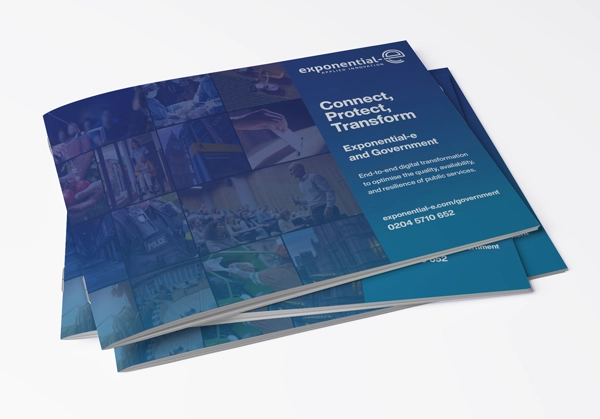
A secure digital foundation for better citizen outcomes, operational resilience, and long-term value.
Public sector organisations are under pressure to deliver more with less while meeting rising expectations for secure, always-available services. This guide shows how an integrated approach to connectivity, cloud, cyber security, and communications creates the resilience, scalability, and compliance government demands – turning digital strategy into real community impact.
651 Hits

An exceptional customer journey extends far beyond the initial point of sale. And nowhere is this truer than for subscription-based businesses, whose continued success is based on delivering consistently seamless, high-quality experiences throughout each customer's time as a subscriber - from the initial sign-up through to the point where they decide to terminate their subscription for whatever reason.
Indeed, these new models have transformed the way many businesses interact with their customers, applying lessons learned from established subscription-based services, such as gyms and streaming services. From both traditional retailers and ecommerce specialists offering scheduled deliveries of household essentials, groceries, and entertainment products, to the now-ubiquitous software-as-a-service model and premium subscriber options on popular social media platforms, there are numerous channels for forward-thinking businesses to establish 'sticky' streams of income, with more still to reveal themselves.
However, the rules around offering and managing subscriptions and memberships of any sort are about to change, particularly with regards to cancellations…
Throughout 2026, the Competition and Markets Authority (CMA)'s regulations around buyer protection and autorenewals are going to evolve, as part of the existing Digital Markets, Competition and Consumers Act 2024 (DMCC Act), in order to help consumers avoid getting trapped in unwanted subscriptions. Organisations found to be in violation of these new regulations can expect to face fines of as much as 10% of their annual revenue.
As a result, any retailer that offers subscriptions or memberships of any kind must be aware of how these changes will impact them in the months ahead and, adapt their systems and processes to ensure they remain fully compliant with all applicable regulations, and - most importantly - ensure that they are still able to offer a world-class experience for their subscribers.
So, what's about to change and how can we best prepare?
- Specific pre-contract information must be provided. The DMCC Act distinguishes between key pre-contract information and full pre-contract information. Both must be provided in full at the initiation of the contract, or the customer will not be bound by the stated terms. Compulsory elements include:
- Full details of payments, include frequency and amounts.
- Minimum total liability.
- Schedule of reminder notices.
- Full cancellation rights.
- Reminder notices will be compulsory. It is no longer enough to assume a customer will automatically want to renew their subscription. Reminder notices must be sent in advance of the renewal date.
- Cooling-off periods will also be compulsory. This applies to both new subscriptions and renewals. Customers must have 14-day window to cancel their subscriptions without penalty.
- Cancellations must be as simple as possible. Cancellation instructions must be provided, and the process must not include any unnecessary steps. This also applies to online subscriptions. Confirmation must be provided within 24 hours.
There's certainly a lot to consider here, but rather than treating these changes as onerous compliance obligations, why don't we treat them as an opportunity to reconsider the overall subscriber journey, and look for new opportunities to enhance it?
Traditionally, when a customer wishes to cancel a subscription or membership, they've done so by speaking to an agent, who will then have the opportunity to discuss their reasons for cancelling and potentially offer some perks to change their mind. In light of the changes mandated by the new DMCC, this is unlikely to be practical in the majority of cases, when customers are able to unsubscribe with a single click. This has the potential to create a serious loss leader for subscription-based businesses whose customer engagement strategy is based on an initial discount or free gift (e.g. the first month's delivery is free, after which the subscriber pays the usual rate), as there is nothing to stop customers hitting 'unsubscribe' right before their first payment is due.
However, with agentic AI and intelligent automation currently transforming both the contact centre environment and the wider customer journey, numerous opportunities have presented themselves to ensure full compliance can seamlessly co-exist with personalised experiences that maximise long-term retention and build brand loyalty.
For example, if someone is looking to cancel via a page on your website and you have already implemented a chatbot function that they use to request a cancellation, the bot can automatically engage a real customer service agent, who can discuss the reasons for their cancellation, provide any hands-on support they need, and (ideally!) offer any perks or resolutions that will entice them to stay.
If your contact centre environment and chatbot functions have been intelligently integrated (as they should be!), these interactions can then be utilised to drive further optimisations, such as ensuring cancellation requests are routed to agents who have the best records of retaining customers, or ensuring agents don't invest their time and effort on accounts that have no realistic chance to renewing their subscriptions. For example, AI-based analytics can identify trends in customer data, such as individual addresses that have signed up for multiple trials but never made a purchase, which will allow agents to focus their attention where it will prove most effective.
And of course, the best approach to minimising cancellations is ensuring customers never want to cancel to begin with! All the data gather through customer interactions - whether it's with an agent or chatbot - can help build up more accurate, comprehensive customer personas that support highly personalised offers, helping to maximise the number of subscription renewals.
Above all, while regulations evolve and customer expectations naturally shift, the value of a personalised experience, delivered by an attentive, knowledgeable professional is a constant for the Retail sector. If we keep this in mind while making full use of the possibilities AI-powered automation offers us, the opportunities will be tremendous.
If you'd like to take a deep dive into your own customer journey and identify where the intelligent application of new technologies could make that all-important difference, just get in touch.
Exponential-e & Retail
Our Retail brochure offers a comprehensive overview of how we draw on a deep understanding of the sector's singular challenges, an evolving technology ecosystem, and a highly consultative approach to offer bespoke solutions that help staff deliver their best for every customer - both online and in person.

706 Hits
In the space of just a few short years, Artificial Intelligence (AI) has gone from being a somewhat niche field, to front and centre in the public consciousness. With the rise of ChatGPT and similar platforms, there is much speculation about where this technology is heading, and what its impact will be on our personal and professional lives. Indeed, organisations across numerous sectors are already exploring the different ways it can be utilised to reduce costs, optimise efficiency, and improve service quality.
3758 Hits

The Customer
The customer is a central governing body that utilises the growing volumes of data generated across multiple channels to optimise the delivery of critical services across the UK, while ensuring the highest standards of security and compliance are maintained at all times.
The Challenge
In 2019, with their existing contact centre solution reaching the end of its life, the customer made the decision to seek out a new platform that would better suit their ongoing drive for the more efficient, effective delivery of critical services, particularly the growing demand for secure, scalable omnichannel communication. Beyond simply routing phone calls, the desired solution would deliver deeper insights into every stage of the customer journey, from the first point of contact to the eventual resolution - and utilise these metrics to consistently maintain a responsive and flexible service delivery that would support the best possible outcomes.
Key considerations included:
- A resilient, scalable multichannel environment - encompassing voice, email, SMS, webchat, and all major social media platforms, that would maximise opportunities for engagement with citizens.
- The ability to configure all elements of the interface to staff's requirements, making it as efficient and user-friendly as possible, with clearly defined supervisory levels.
- Robust cyber security and governance inherent in the design, ensuring data protection policies would be consistently applied and all compliance obligations met, while optimising the accessibility, quality, and utility of all data.
- Granular and broad visibility across the entire solution, allowing administrators to tailor the solution within predetermined parameters, allowing tools and processes to be continually refined in response to feedback.
- Bespoke dashboards and reporting, allowing analysts to effortlessly access key metrics and monitor every step of the citizen journey in real-time.
- Seamless integration with existing platforms, with scope to integrate further tools in the future.
Based on these criteria, an in-depth evaluation was conducted of eleven separate contact centre solutions, measuring their capabilities against a detailed list of requirements and the customer's long-term tech and data strategy. At the end of the assessment process, Exponential-e's deep experience across the public sector, consultative approach, and openness to developing bespoke solutions made them a clear standout, with their Contact Centre as-a-Service solution fulfilling all technical requirements. As a result, they were selected as the customer's technology partner for the new contact centre's design and implementation.
Key factors in this decision included the Cloud-based model, which aligned with the customer's ongoing Cloud transformation journey, the inherent flexibility the platform offered in terms of hybrid working, the ability to integrate existing apps, and its highly intuitive user interface.
Solution
In the run up to 'go live', the Exponential-e's project team worked closely with the customer's own teams to ensure agents were ready to adopt the new technology. Following extensive training, agents were able to make full use of the new platform on the same morning the legacy telephony system was switched off, without any disruption to live services. The already strong relationship between teams at both companies, established during previous complex deployments, proved invaluable here, with close communication and collaboration at every stage laying the foundation for the project's eventual success.
As all interactions were now taking place through a single, fully integrated platform, the consistent application of skills-based routing ensured citizens were put in touch with the appropriate agent as quickly as possible, with time on hold kept to the absolute minimum. In addition to optimising the path to successful resolutions, this also meant that analysts could access all data about each citizen's journey through a centralised knowledge base, regardless of the number of channels involved. A combination of real-time analytics and automated satisfaction surveys was utilised to measure the quality of each interaction.
To ensure this data could be used to its fullest potential, the customer was able to create bespoke dashboards for a range of metrics, including the channels and menus enquiries were received through, wait times, the agent who handled each, whether the call needed to be transferred, and the final time to resolution - all updated every fifteen seconds. This way, both analysts and supervisors could access a wealth of information on both agent performance and citizens' overall experiences, without needing to consolidate information from multiple channels and records, as had previously been the case.
With this critical information automatically collated in an actionable form and the ability to automatically apply service changes through the dashboards, the new contact centre enabled true data-driven decision making at all levels, so tools and processes could be constantly refined and, ultimately, the highest levels of service quality and availability maintained.
As an early adopter of hybrid working, the new contact centre only strengthened the customer's capabilities in this regard, granting supervisors maximum flexibility in terms of how agents were deployed, without compromising data security, call quality, or their ability to collaborate with their colleagues whenever necessary.
The new contact centre is constantly evolving, as the high volumes of data gathered during each interaction reveals new opportunities for service enhancements. Administrators can continue refining their tools and processes via their dashboards, with support available from their Exponential-e account team and a 24 / 7, UK-based support desk, whenever it is required.
All of this demonstrates how the ever-growing volumes of data generated across multiple channels can be used to improve wellbeing across the UK, and the potentially transformative power of technology when utilised in service of the public good.
Solution benefits
- A flexible, omnichannel solution for all citizen communications, optimising the delivery of critical services across the UK.
- A holistic view of every citizen journey through intelligent, real-time analytics.
- Automated tracking of agent performance, helping drive a culture of constant improvement.
- Fully tailored for hybrid working, ensuring consistent security and service quality wherever agents are connecting from.
- Full compliance with all applicable regulations around the handling of citizens' data, while ensuring it remains readily accessible to authorised individuals.
This brochure offers an in-depth exploration of Exponential-e's entire UC and CC ecosystems, all of which we deliver in bespoke combinations to optimise your internal and external communication strategies.

2215 Hits

Failure Demand: "Demand caused by failure to do something or do something right for the customer"
Seddon, 2003
7676 Hits

Here's why that's a good thing…
"In the new contact centre, we're no longer reliant on hunt groups, and can onboard new services and new desks very easily, which has allowed for a much higher level of agility in terms of how we connect and collaborate with our colleagues and partners. We've also got a much higher level of control, so we don't need to go through our IT teams to make changes or updates when we need to, and can constantly refine our call flows."
Stacey Whyte, NHS Digital
5070 Hits

There's no doubt that the current economic environment has led to feelings of instability, in both our personal and professional lives. Consumers are feeling the pinch, and with rising inflation and interest rates, they will have no choice but to curtail their spending. The impact on business is similarly far-reaching. Aside from the economic impact of the reduction in spending, there is the very real situation that both employees and customers will be experiencing stress in their personal lives. As a result, many organisations across the public and private sectors are evaluating how to best maintain their service quality under these difficult circumstances.
4142 Hits

How Actionable Data Drives Sales, Improves Employee Satisfaction, and Enhances the Customer Experience
One of the key components we discuss with organisations when defining their contact centre needs is their data: the data the organisation requires, the data the solution can report on, and the tools available to interpret this data.
3251 Hits

We've probably all encountered what we consider to be poor customer service through a contact centre, whether it's calling your utilities provider, banking, mortgages, or just everyday online shopping.
There have been many excuses for poor service through the pandemic due to ill-prepared home working solutions. Those should be behind us now, although that's likely the topic of a further blog, as many companies are still leaning on this excuse!
3700 Hits

Customer service is in the middle of a deeply transformative period. Regular readers of this blog will already be familiar with the role AI has to play in this journey, and the way technologies like machine learning and Natural Language Processing (NLP) are transforming the customer experience.
2189 Hits

It's often said that "You don't know what you don't know". This is especially true in the modern contact centre, where a range of different customer interactions are taking place on a near-constant basis, across a growing range of different channels. It might be tempting for managers to assume that if they aren't having any problems presented to them, everything is running perfectly.
2532 Hits

In the contact centre, the customer journey is everything. Every potential point of interaction must be carefully considered, with systems and processes established to maximise the chances of a fast, satisfactory resolution.
2256 Hits

© 2026 Exponential-e Ltd. Reg. No. 04499567, Reg. Address:100 Leman Street, London E1 8EU